Posted in Posts and podcasts

Temperance Day – 1907

Freeman’s Journal September 9th 1907  p.12 (abridged)

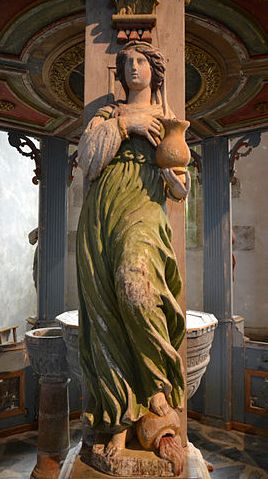
Representation of temperance (painted wood sculpture c1683 at the church of Breton Commana, France). Photo: Lamiot Wikimedia Commons
Representation of temperance (painted wood sculpture c1683 at the church of Breton Commana, France).
Photo: Lamiot
Wikimedia Commons

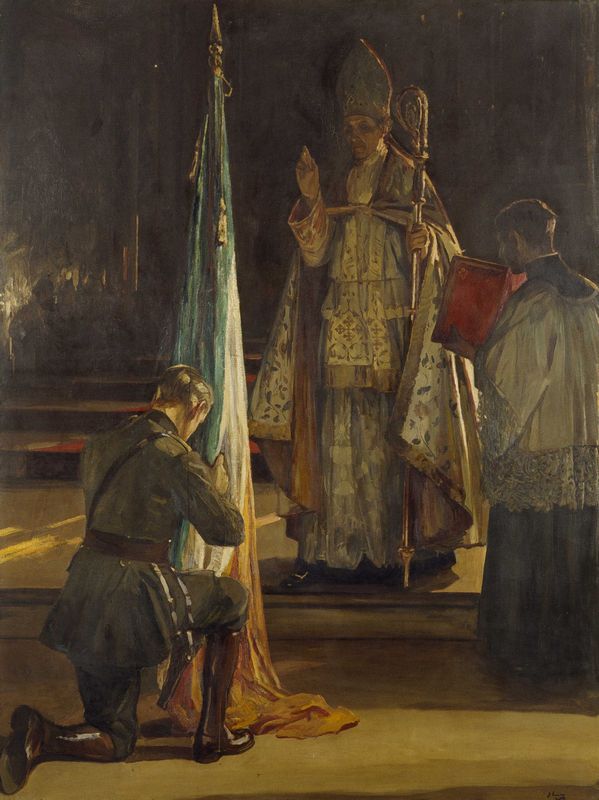
The splendid demonstration yesterday in Dublin, in the streets and on the platform was conclusive proof of the steady and swift advance of Temperance.  As the Chairman Father Aloysius, said in his opening statement, from every part of Ireland, north, south, east, west, contingents representing the various Temperance Societies in the country took part in the procession and the great public meeting which followed.
Such demonstrations are eminently serviceable to the cause. Success is the best reward of honest labour, and the indefatigable workers in the cause of Temperance found their wages and encouragement in such conclusive proofs of its progress.
Temperance Day may now be regarded as an annual festival. Last year it was held in October, and was a very considerable success. But owing to the lateness of the seasons and the inclemency of the weather it was impossible to expect any large country contingent. For this reason an earlier date has been selected and the overwhelming success of yesterday’s celebration most amply justifies the change.

Posted in Posts and podcasts

The Banshee – 1888

Irish Examiner 15th December, 1888 p5

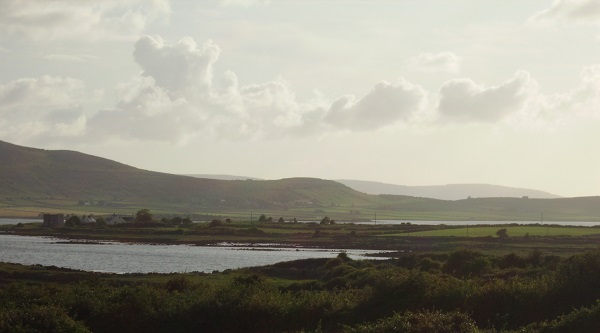
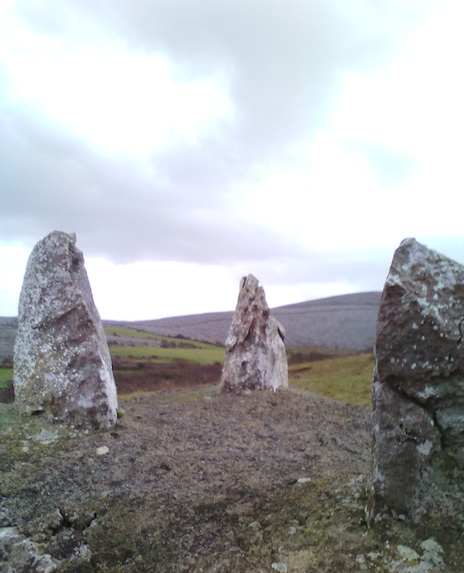
The Burren and beyond Photo: EO'D
The Burren and beyond
Photo: EO’D

(abridged)
Once I saw a banshee. It was many years ago. During the summer months the twilight is very long and late one afternoon, when the sun had gone down, I happened to walk over to the farm of M.B. Well, as we stood and talked, my friend suddenly said;
“Mike, do you want to see a banshee?”
Of course I did and looked where he pointed. Sure enough, there in the lane, creeping along near the hedge, was a wee bit of a thing, no more than three feet high. It looked like a young girl, only its hair, which was long and yellow, fell down its back clear to the ground, and as it crept along it whimpered and moaned just like a child in pain. My friend looked very grave, saying;
“That’s a family banshee, and I’m afraid some of my relations are going to be sick.”
Pretty soon after a neighbour came riding up and told my friend to make haste as his mother had been taken very ill.
The next day I learned that the poor woman had died before her son reached her.
The banshees are queer things, and they never let anyone come near them. Another man I knew came across one sitting in a corn field, near the fence. When he suddenly appeared it ran out of sight among the corn, but it dropped its comb from its yellow hair and the man picked it up and put it in his pocket. That night the banshee came near the house and whined so piteously that the man dropped the comb out of the window. The banshee then left, and when a search was made the next morning it was found that the comb had disappeared too.

Posted in Posts and podcasts

After hours – 1925

Connacht Tribune 5th December, 1925 p5 (abridged)

One for the road. Photo: EO'D
One for the road.
Photo: EO’D

There is more illegal trading going on in this village than in any other village in Ireland, said Supdt. English, Gort, at Kinvara District Court, when Mr –, a publican in a village between Kinvara and Clarenbridge, was prosecuted for a breach of the licensing code on Sunday. The district justice, after hearing the evidence, imposed a fine of 40s and endorsed the license.

The evidence was that on a recent Sunday the Guards who were on public house duty visited the place and found the front door and the bar opened, and a crowd of people in the yard. There was a man in the kitchen and Mr and Mrs — were in the shop. Mr — was behind the counter with a bottle of stout in one hand and a glass in the other, in the act of filling out the liquor. When the Guards approached the crowd ran away and it was his (superintendent’s) opinion that “scouts” were on the look out.
The Guards, he continued, had the greatest difficulty in supervising this illegal traffic in Sunday drinking and this man was convicted before in January last. Mr — told the Guards that the man in the kitchen was an invited guest and a friend of his. The Guards examined the premises and found traces of porter on the counter and fresh porter in glasses. At the time the Guards visited the place it was 12.25 p.m. – Guard McGuire and the local sergeant corroborated. When they went there they said the door was wide open, and when Mr — saw them entering he endeavoured to close up the bar by pulling down a latticed shutter between the shop and the bar, and when questioned he said the men were all bonafide travellers.
Magistrate (to defendant):
Have you anything to say?
Mr –;
The men were all bonafide.
Magistrate;
You could not have them there before one o’clock, even if they were. You should know the provisions of the new Act as a publican.
Defendant;
I have nothing to do with the yard attached.
Magistrate;
It is attached to and licensed as well as your premises and you are bound to see that nobody is there only those entitled to be there. You are bound to exercise strict supervision over the yard as well as the premises.
Mr –;
People come there and put their carts in my yard while they are at Mass.
Magistrate;
I know nothing about that. It might be a cloak to get drink illegally.
Superintendant;
There is more illegal trading going on here than in any village in Ireland and the Guards cannot exercise supervision owing to the “scouts”.
Magistrate;
I hope that this thing will be put down and that the Guards will keep a watchful eye on the place, and I will impose a fine of 40s and endorse the license and make a D.W.P. order against the man found on the premises.

Posted in Posts and podcasts

Kinvara exports – 1867

Irish Examiner 23rd April, 1867 p1 (abridged)

Patates Photo: Scott Bauer, USDA ARS Wikimedia Commons -
Patates
Photo: Scott Bauer, USDA ARS Wikimedia Commons –

Just arrived the Schooner Westward, with 110 Tons from Kinvarra in the Galway Bay, the shipment of Joyce and Curtin, in the English and Limerick markets, where the quality of those potatoes are known.
They array from 10s to 15s per ton more than others, and go by the name of “Galway Protestants.” Those requiring them for seed should put down a lesser quantity, as they are of a prolific nature, otherwise the crop will be bad. Parties wishing for a good summer potatoe will find it their interest to supply themselves out of present cargo.

Posted in Posts and podcasts

Galway Bay – 1914

Irish Independent 30th October, 1914 p3

Galway Bay EO'D
Galway Bay
EO’D

A rumour gained currency in Galway on Wednesday evening that mines had been laid in Galway Bay. It appears that when the ss Karlsburg from Sweden, with timber, steamed into the harbour, 20 police and coastguard officers boarded her and remained throughout the night. Their places were taken by fresh constables yesterday morning. A thorough examination of the vessel, however, found nothing that lent colour to the mine laying story.
In an interview with the mate of the Karlsburg it transpired that the Admiralty early on Wednesday wired to the Customs officials at Galway to detain the vessel on suspicion.

Posted in Posts and podcasts

Crab Island, Doolin – 1918

Freemans Journal 17th April, 1918 p3 (abridged)

Crab Island, Doolin, County Clare Photo: Dr Charles Nelson Wikimedia Commons
Crab Island, Doolin, County Clare
Photo: Dr Charles Nelson
Wikimedia Commons


The County Clare police have arrested a man who entered Crabbe (Crab) Island, in a sheltered inlet of Galway Bay, near Doolin, in a collapsible boat, and who declared that he had escaped from an American ship that had been sunk by a German submarine.
It appears that the ship mentioned was not sunk, and the mysterious visitant of this lonely coast, which is well within the bay, being unable to give a satisfactory account of his presence, was conveyed by the naval authorities to Scotland Yard.
He wore the clothes of an ordinary civilian with a frieze coat, and it appears that he got £45 in silver at an Ennistymon bank. He is a man of education and states that he is a native of Munster.
The collapsible boat is not of the ordinary type but has cork stays and can be rolled up into a small parcel.
He was taken to Dublin on the way to London

Posted in Posts and podcasts

Claddagh -v- Kinvara 1864

Freeman’s Journal 13th September, 1864 p2(abridged)

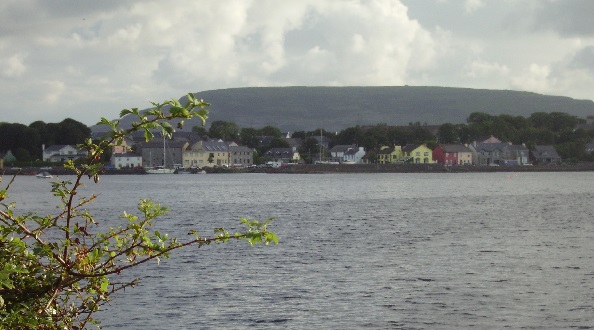
The Quay, Kinvara. Photo: EO'D
The Quay, Kinvara.
Photo: EO’D

Everyone in Galway is aware of the immense quantities of herrings that are at present in the bay but the Claddagh men will only go out every second night to capture them.
On Tuesday night Captain Oliver, one of the pilots, went out in his boat. This being a prohibited night, he soon found that he was being chased by two large hookers – watch boats, as they are termed – each filled with men. Seeing that he could not fight them he ran into Oranmore Bay and thus escaped.
On Friday night the “watchmen” succeeded in committing an outrage. Several boats from Kinvara were fishing when three or four Claddagh hookers, with about twelve men in each, bore down and cut away some of the nets. The boats that escaped came into market with immense quantities of herrings.
Very few of the Claddagh boats are marked, according to law, so that identification in such cases is almost impossible.

Posted in Posts and podcasts

Galway to Kinvara 1924

Freemans Journal 19th January, 1924 p8

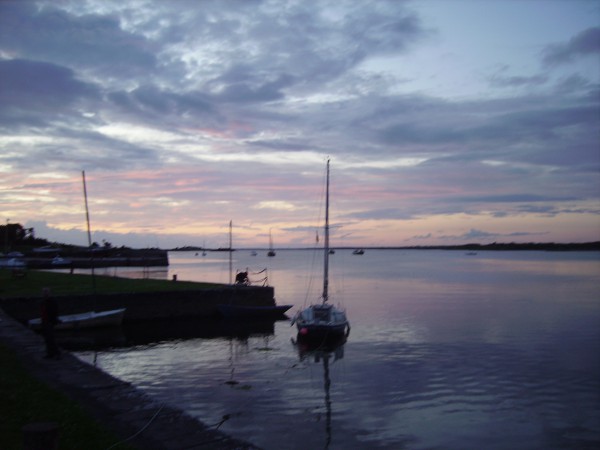
Galway Bay Photo: Norma Scheibe
Galway Bay
Photo: Norma Scheibe

Lieut Commander O’Donnell, of the Free State Coastal Patrol, a native of the Aran Islands, has initiated a scheme of coastal traffic in Galway Bay and proposes to run a direct service from Galway to Kinvara with the motor boat, St. Nicholas, and later to trade along the Northern coast of the county to Clifden.
==========

Posted in Posts and podcasts

A walk in the Burren – Temple Cronan

Temple Cronan, the Burren, County Clare Photo: EO'D
Temple Cronan, the Burren, County Clare
Photo: EO’D
Temple Cronan Photo: EO'D
Temple Cronan
Photo: EO’D

Temple Cronan, the Burren, County Clare has been dated to the 12th Century.

The church is Romanesque in style, with carved stone heads (human and animal) on projections around the walls. Small shrines lie to the east and south east of the church and beyond the enclosure traces of several dwellings can be seen. A small track leads from Temple Cronan to a holy well – and to a wonderful walk through the hills. A beautiful site, in a beautiful place – the Burren, County Clare.