Posted in Posts and podcasts

Stormy weather – Galway – the bay of Kinvarra – 1771

Finns Leinster Journal 13th February, 1771 p.1

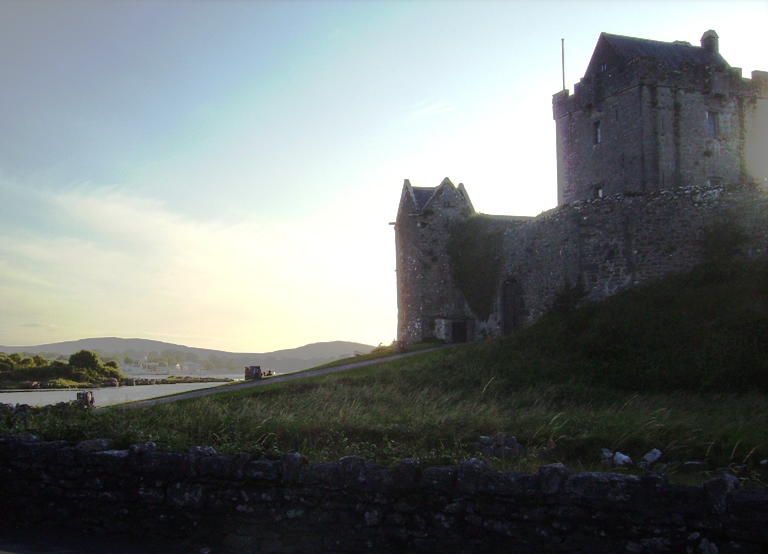
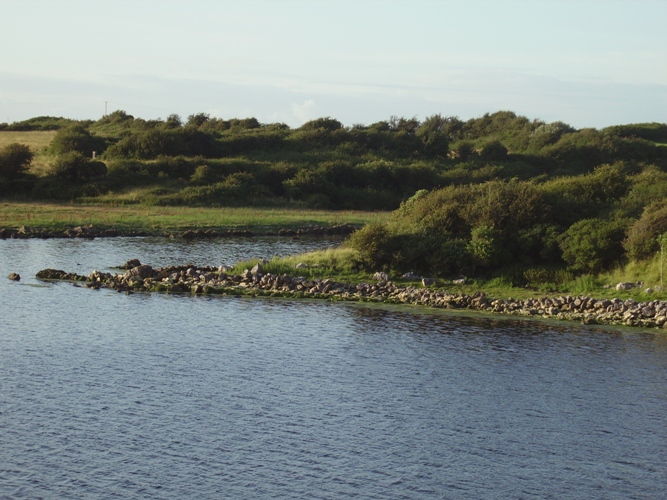
A fine evening Dunguaire, Kinvara Photo: EO'D
A fine evening
Dunguaire, Kinvara
Photo: EO’D

Galway, Feb 4.
Last Wednesday and Thursday were so prodigious a storm that the spring tides on those days swelled so high as to overflow the Quay and parts adjacent. In several houses in the neighbourhood, the water was above three feet high; but on Thursday a circumstance happened which much surprised all that observed it, as the like was never perceived here before. Whilst it was flowing, the tide, as if by some violent emotion, was twice within the space of an hour, suddenly raised above its usual height, and as suddenly subsided, which made many think there had been an earthquake.

A sloop, said to be from Limerick, bound for Rotterdam with butter, has been for some days past in the Bay of Kinvarra, opposite this coast, her name or the master’s name not intimated; but it is said she has lost her rudder and is otherwise damaged by the tempestuous weather.

Posted in Posts and podcasts

Kinvara – 1910

Freemans Journal May 6th 1910 p.10

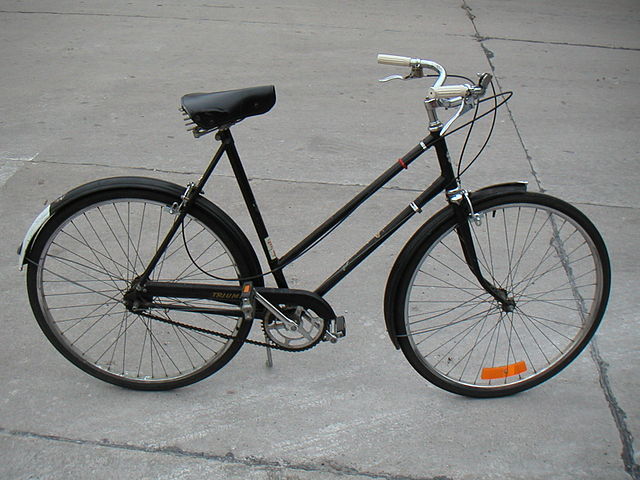
Triumph Bicycle Photo: Andrew Dressel  Wikimedia Commons
Triumph Bicycle Photo: Andrew Dressel
Wikimedia Commons

Following up the cattle drive of two days ago at Duras, Kinvara, it is reported here that another large drive took place early this morning at a place called Caherglissane, six miles from here. The police are very busy all this morning running on bicycles from place to place in the district. Inspector Cruise has left here for Kinvara. Fifteen arrests have been made.

Posted in Posts and podcasts

Kinvara – turf tax – 1912

Tuam Herald 14th September, 1912 p.2  (abridged)

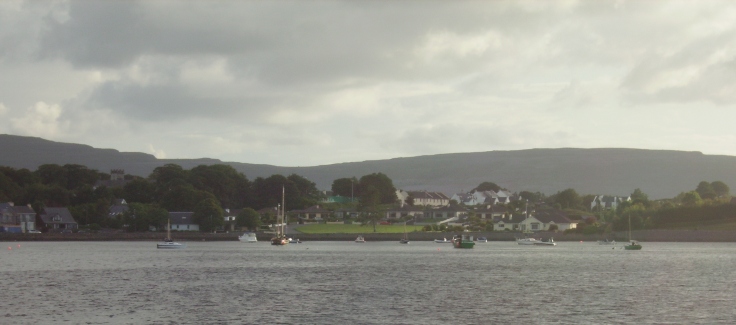
Kinvara. Photo: BO'D
Kinvara.
Photo: BO’D

The harbour authorities of Kinvara exact three pence for every load of turf coming in from Connemara. During the turf season over 20 boats come and go every day and this season the cost for a boat load of turf was from 45s to 60s.

The men who bring the turf from Connemara are fine specimens of Irishmen. Each puckaun contains three men and they are excellent sailors and navigate their crafts in so expert a way that never an accident occurs. The turf is expensive but most necessary. There is no turf in the immediate neighbourhood of Kinvara or within miles of the town, so the people must depend on the supply from Connemara brought in these boats from over the bay.

Posted in Posts and podcasts

Kinvarra Waterworks – 1935

Irish Independent 21st February, 1935 p7

Rath Durlais Kinvarra, Co. Galway Photo: BO'D
Rath Durlais
Kinvarra, Co. Galway
Photo: BO’D

Kinvarra Waterworks.
A waterworks scheme has just been completed at Kinvarra, Co. Galway at a cost of £2,000. The well at Cartron has been enlarged and a windmill has been erected to drive the water a distance of about 250 yards to the reservoir on a hill overlooking the town.

Posted in Posts and podcasts

Tír na nÓg – Lahinch – 1935

Irish Examiner 13th April, 1935 p.13 (abridged)

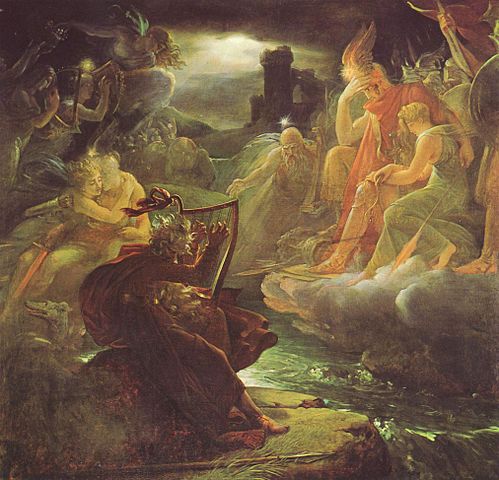
Ossian François Pascal Simon Gérard 1770-1837 Wikimedia Commons
Ossian
François Pascal Simon Gérard 1770-1837
Wikimedia Commons

It is said that two miles out to sea and due west of Lahinch there is a great span of submerged rock, where breaking waves constantly spread in the white stretch of foam. The tale goes on to relate that on the very sport there once stood a great city of magnificent palaces and lofty castles. One morning it disappeared and the waves rolled over the place where it once stood. On calm days when the sea is placid it is claimed that glimpses of the towers can be seen beneath the waves. Whether the story can be taken with the proverbial grain of salt or not, is not what I am concerned with. Neither am I anxious to prove that it is a deliberate fable invented by some ancient seanachie. I am concerned though with the insistence of the tale’s oldness and wish to emphasise that it has been associated with West Clare fireside gatherings since time immemorial.

The tale mentions the city’s size;
“It was as wide as Liscannor Bay and built as high as the cliffs of Moher.” There too, is mention of “towers and battlements that guarded wonderful palaces where happy people lived.” I have, as a youngster, often listened to the story and any doubt as to its authenticity I was wont to harbour, used to be dispelled by the narrator’s (who was an old fisherman) air of seriousness. The narrator insisted that every seven years and on a certain day, indicated by the phases of the moon, the towers of the buried city appeared over the surface of the sea. Anyone that beheld the sight died within the year and many instances used to be related to bear out this fact. In time I became convinced that such a place did exist, and often when seeking periwinkles on the rocks my eyes would wander westward towards the reef.
DPT

Posted in Posts and podcasts

The brave men of Ballinderreen – 1910

Connacht Tribune 16th April, 1910 p4

JohnBlakeDillon Published in Michael Doheny, "The Felon's Track" M H Gill & Son, Dublin, 1920  Project Gutenberg
JohnBlakeDillon
Published in Michael Doheny, “The Felon’s Track” M H Gill & Son, Dublin, 1920
Project Gutenberg

If the people emulate the example of the brave men of Ballinderreen, by keeping their counsels to themselves, and giving no quarter to traitors, the days of landlord rule and rent office truculence are numbered in the district. The descendants of the men of Kinvara and Duras who, in the days of the 1848 Movement, shielded John Blake Dillon from the Government of the day, when a huge price was offered for his apprehension, and carried him away in triumph to an Atlantic liner bound for the “land of the free,” are surely not going to falter in the most supreme crisis in the history of the country.

The meeting will be addressed by Messrs Wm. J. Duffy; John Roche, M.P. Coghlan Briscoe; C.W. Cogan; Rev. B. Corcoran C.C. and several well-knownn public speakers. Mr C.W. Cogan, U.I.L. organiser has visited all the districts and organised immense contingents for the meeting. The Rev. Martin Keeley, C.C. has consented to preside. The chair will be taken at 1.30 pm sharp. Mr Thomas P. Corless, the indefatigable and energetic secretary and organiser of the meeting, has spared neither time nor trouble to make it a great success. The names of the different contingents should be handed in to the secretary early.

Posted in Posts and podcasts

Kinvara – a history

Historical notes on theburrenandbeyond.com

Dungory/Dunguaire Castle, Kinvara, County Galway. Irish Press 12th November, 1931
Dungory/Dunguaire Castle, Kinvara, County Galway.
Irish Press
12th November, 1931
Posted in Posts and podcasts

A peculiar fascination – 1907

Nenagh News 17th August, 1907p3    (abridged)

Hooker at Kinvara Photo: Cqui Creative Commons
Hooker at Kinvara
Photo: Cqui
Creative Commons

To witness an ordinary sailing open boat, built-in tonnage to ply between Connemara and the coast of Clare, a distance of about 60 miles, ploughing the waves in the full breeze of ordinary sailing weather,  is a novelty to the visitor or tourist uninitiated in the art of steering or sailing such a craft. There is something very taking in this style of sailing boat, away from the ordinary sailing yacht.

The boat is locally known as a hooker, rigged with mast and bowsprit, and carrying a reddish-brown suit of three sails, a jib, foresail, and mainsail, comprising over one hundred square yards of fine canvas. This style of boat, with all sails set to the Atlantic breeze, presents a very picturesque appearance, ploughing the surging waves, tacking and retacking to gain the point of destination against a head wind, bending to the breeze, with the hull of the boat disappearing at intervals between mountain waves, to reappear again on the surface, soon again to be engulfed in a valley of sea with sails trailing along the waters in obedience to gusts of strong wind, and the sea rolling in a grand curl high over the weatherboard, with nothing to keep it from engulfing the open boat but the speed of the boat itself, and the skill of the seamen to keep the rudder, sails and boat in touch with the motions of the wind and seas.

To see this entire stretch of sea strewn with every style of sailing boat crossing and recrossing each others paths in a regular breeze is a sight one could never tire of seeing and admiring. There is a peculiar fascination about sailing in open boats or decked sailing yachts of any description, that one feels uncomfortable in the stately steam or motor vessel from the loss of excitement experienced in open sailing boats and rolling sea.

Posted in Posts and podcasts

Kinvara Courthouse – 1939

Connacht Tribune 30th September, 1939 p23 (abridged)

Courthouse, Kinvara Photo: EO'D
Courthouse, Kinvara
Photo: EO’D

At their weekly meeting in the County Buildings, Galway on Saturday, Mr Martin Quinn, chairman, Galway County Council finance committee, gave the tenders for repairs to the Kinvara courthouse to Mr Patrick Burke, Ballinderreen, Kilcolgan at £39. Mr G. Lee, county surveyor, reported that Messrs, Griffin Brothers, Gort, who had tendered at £28.15s were not prepared to carry out the work at that figure as they had made a mistake in the matter. Recently the County Council secured a long lease of the Kinvara Courthouse.

Posted in Posts and podcasts

The hills of Clare – 1922

Sunday Independent 18th March, 1922p8

The Burren Photo:EO'D
The Burren
Photo:EO’D

The prize of half-a-guinea for the best poem this week to “Irish Verse,” is awarded to Liam P. Clancy for his “Hills of Clare.”

Och, drear and lone this London is,
And cold and bleak and bare,
And day and night I’m missing still
My own beloved Clare.

I miss the mountains hid in mist
When skies are dawning grey,
And, in the valleys shadow-kist,
The hush at heel o’day.

I miss the low wind’s lonesome croon
In the winter drear and long,
I miss the trill of the thrush’s tune,
The lilt of the blackbird’s song.

There’s grandeur here and wealth untold,
And mansions proud and fair,
I’d give them all – their gloss and gold –
For a hut on the hills o’Clare.

I miss the cross-road dances gay,
The laughter, light and loud and free
Och, here it’s lonesome, long’s the day,
Here is no place for me.

Then I’ll be going where my heart is set
‘Mid heath-blooms fresh and fair,
Where the gold-lights glow in the dawn dew-wet
On the gorse-gilt hills o’Clare.