
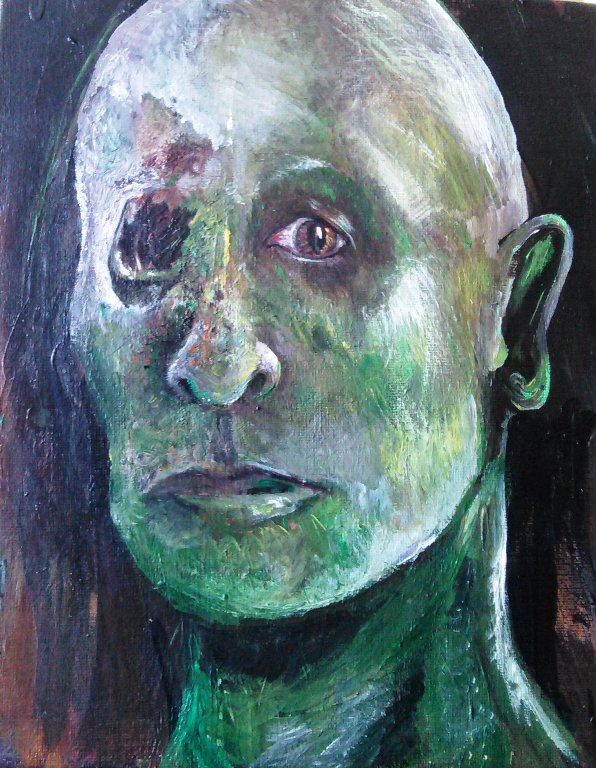
Acrylic on canvas
EO’D
Posts and Podcasts
South Australian 2nd April, 1840 p.6
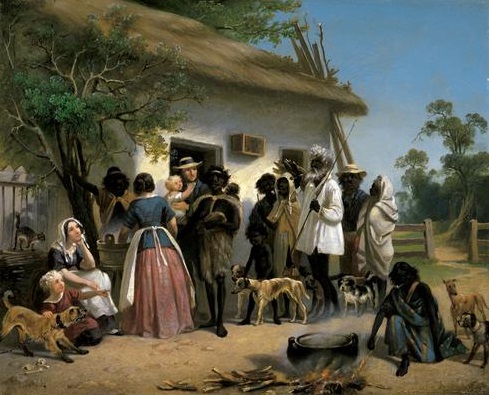
In the Dublin Monitor of the 26th of October last, a long Report is contained of the proceedings of a recent meeting held at Loughrea, in the county of Galway, with the view of promoting emigration to South Australia. The meeting was attended by all the influential landed proprietors in and about that town.
Mr. Torrens delivered a very long and able speech, developing the Wakefield principle of colonisation; describing its successful operation in South Australia, and explaining the reasons of failure in attempts to colonise on the principle of distributing settlers by grants of land over a large territory. Appearing as the especial advocate of South Australia, Mr. Torrens, with considerable skill, brought into strong light the disadvantages of other colonies – especially the evils attending the convict system in New South Wales and Van Dieman’s Land.
The main object of the meeting was to set on foot a scheme of “depauperising” the Union of Loughrea, which is about to fall under the operation of the Irish Poor Law; and relieving the owners of land from the burden of supporting a numerous population by removing a portion to land in South Australia purchased by the Union.
Australian Chronicle 17th November, 1840 p.2 (abridged)

To the Editor of the “Freeman’s Journal.”
The Very Rev. Mr. Mathew, being on a visit at Kilcornan, the hospitable mansion of N. Redington., Esq., M.P., administered the total abstinence pledge, on the 21st and 22nd ult. to upwards of eight hundred postulants. Many from the neighbouring parishes of Oranmore, Ballinacourty, Ballinderreen, & c., who lost the opportunity of approaching him while in Galway and Loughrea, took advantage of his propitious visit to Kilcornan. The people of this locality have been extremely fortunate.

The Recorder 22nd November, 1935
Ireland long bore the name of Granuaile, which is Gaelic for Grace O’Malley a chieftainess whose headquarters were on Clare Island, off the west coast of Ireland. There stood the Tower of Carrigahooley, which she called “the rock of her fleet.” She was a wild and successful warrior. Queen Elizabeth admired her and entertrained her in the royal palace.
The Advertiser 23rd October, 1931 p5 (abridged)
The following 12 organisations have been proclaimed illegal – the Saor Eire, otherwise the Irish Republican Army, the Oglach na Eireann, the Fianna Eireann, also the Cumann na mBan, otherwise the Women’s League of Friends, the Soviet Russia Labor Defence League, the Workers’ Defence Corps, Women Prisoners; Defence League, Workers’ Revolutionary Party, the Irish Tribute League, the Working Farmers Committee and the Workers’ Research Bureau.
The Irish military tribunal which has been created to take the place of trials by jury will consist of Colonel Francis Dennett, acting assistant chief of staff, Colonel Daniel McKenna, deputy quartermaster-general, Major John Joyce, deputy adjutant-general, Commander Connor Whelan, 3rd Battalion, Commandant Patrick Tuite of the training camp at Curragh.
Tuam Herald 14th September, 1912 p2
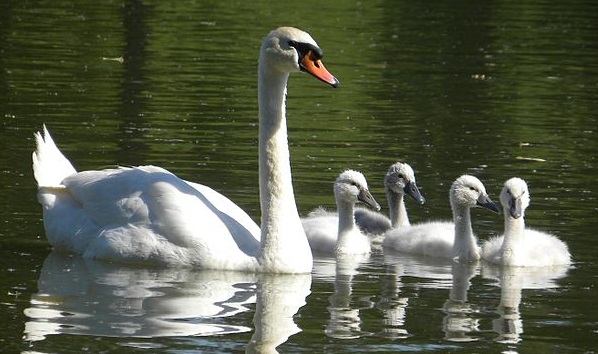
Four miles from Kinvara is the fine old castle of Caherglissane, now like all such buildings, in ruins, but the walls are in fair order. Beside the castle is a fine old fort and near it also a chasm or deep opening in the ground – the result of an earthquake or some such disturbance. It is said by old writers to have occurred at the time of the famous earthquake of Lisbon. It is a curious natural feature and shows the wonderful effects of an earthquake. There is also a curious lot of stones forming a very stiff bit of ground and difficult to walk over and a fine lake on which are wild swans. These beautiful creatures breed about the place and are never disturbed or shot. The country people have a reverence for them almost amounting to superstition, and long may it remain, for these birds never do any harm and are an ornament.
The W.A. Record 13th May, 1905 p.6 (abridged)
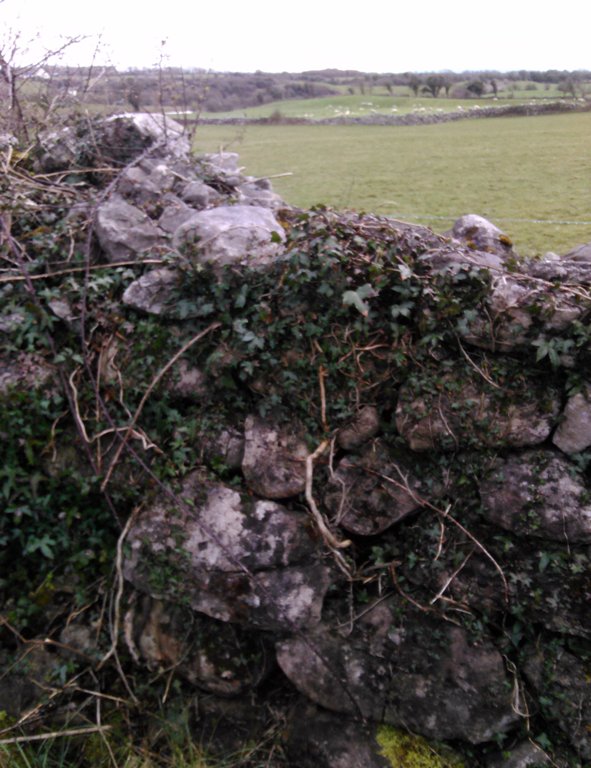
Great excitement prevailed at Ballinderreen on Wednesday (says the “Freeman” April 1), connected with service of processes for non-payment of rent upon tenants of the St. George estate. A fortnight ago the process-server, under the protection of a number of police, attempted to serve the processes, but the attempt failed, owing to the resistance offered by the people. Today a force of sixty police left Galway to assist the process-server, with a contingent of police drawn from other places. The people, however, were apprised in advance of their coming. The dry stone walls on each side of the road had been torn down to the ground and thrown upon the roadway, so that no vehicular or foot traffic could take place upon the road.
The whole force was set at work to clear the debris, but the pace was slow as some of the boulders required two or three police to remove. During the work the chapel bells at Ballinderreen were tolled. A large crowd of people gathered on a hill over-looking the village and shouted and jeered at the police and the process-server, while the latter did his work by nailing the processes to the doors of the houses of the different tenants who were being processed for rent. Relays of police were stationed all along the public road, and were kept continually employed in making a roadway for the cars. As the walls were levelled on to the road the whole way. It took three hours to serve all the processes.
The land on that part of the estate is of very poor quality, being cut into small patches by great boulders and other impediments. The price paid by the tenants is between 15s and 20 per acre, and from appearances is far in excess of the value of the land.
The Australian 11th Jan, 1844 (abridged)

The first monster meeting since the prorogation of Parliament, came off at Loughrea, in the county of Galway, about ninety miles from Dublin, on Sunday. Mr. O’Connell went with his friends from Dublin in a carriage and four to Ballinasloe. He departed from thence about twelve o’clock on Sunday morning and arrived at Loughrea at three o’clock. At various points along the road groups of people were assembled who hailed Mr. O’Connell with that enthusiasm which is the characteristic of the Irish people. Multitudes, accompanied by bands and banners, went out from Loughrea to meet and escort Mr. O’Connell to the meeting. The procession was swelled by many bands of music and companies of men and women who came from various distances.
Several hundreds of horsemen, many with their wives mounted behind them, joined in the procession. The rain fell heavily during the whole day and somewhat dampened the ardour of the zealous repealers. Mr. Bodkin, M.P., took the chair. Mr. O’Connell’s speech was brief and distinguished by no novelty. Speeches were afterwards made by Dr. M. Hales, Dr. Ffrench, and Mr. J. Ffrench.
 The Burren and Beyond