
The Intermountain Catholic 28th November, 1903 P2

National Library of Ireland Wikimedia Commons
The annual pilgrimage to the burial place of St.Colman MacDuagh, in the vicinity of Gort, County Galway, took place on Thursday.
The Intermountain Catholic 28th November, 1903 P2
The annual pilgrimage to the burial place of St.Colman MacDuagh, in the vicinity of Gort, County Galway, took place on Thursday.
The London Gazette, 12th October, 1909 p7494

The Chief Inspector of Factories has appointed Dr. T. J. Connolly to be Certifying Surgeon, under the Factory and Workshop Act, for the Kinvarra District of the County of Galway.
The London Gazette, 13th June, 1862 isa 2264 3077
RE: Winter, a Bankrupt.
To Timber Merchants, Builders and others.
To be sold by auction by Mr E. Staunton, at the Quay, Kinvarra, near Galway, in the county of Galway, on Thursday the 19th day of June, 1862, the sale to commence at 2 o’clock in the afternoon precisely, in one or more lots to suit purchasers.
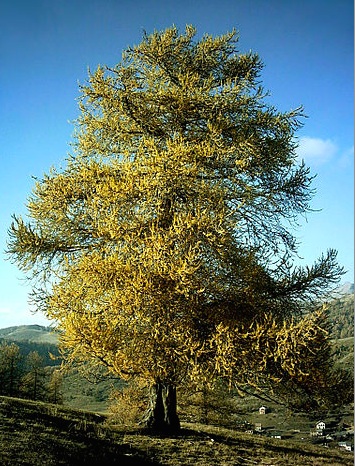
A quantity of well seasoned timber, consisting of about 6,000 yards of propwood, and about 400 yards of larch timber. The timber is now lying on the Quay at Kinvarra where it may be viewed, and affords every opportunity for immediate and cheap shipment. The purchaser to pay the usual commission of 5 per cent.
For further particulars apply to the Auctioneer, at Galway or to James Black hurst, Solicitor for the Assignee, No 18 Basnett Street, Liverpool.
New York Tribune 29th September 1920 p1

The Black and Tans fired indiscriminately through the streets of Conakilty Sunday, smashing windows and causing considerable damage. At Moycullen a lorry filled with armed police rounded up the townspeople coming from mass, separated the men from the woman and drove the former into a field. A man, apparently the leader of the police, addressed them. He announced that a local land agent who had been forced to leave town was about to return home and that if a hair of his head was touched, six Republicans would fall in revenge.
After an attack on a police escort at Ardrahan, County Galway the local town hall was burned down by the police.

Connaught Journal
5th May, 1823
To the Editor of the Connaught Journal
Sir,
I beg leave, through the medium of your valuable and independent Paper, to reply to a paragraph that appeared in the Advertiser of Saturday last, tending to traduce my character. On Friday last, at about nine o’clock, I had been hurried to the Town Gaol by order of the Mayor, without his making a single inquiry relative to my business, or reference in Galway. This, without the liberty of vindicating myself from even suspicion, and unconscious of a crime, I had to remain in prison until Saturday morning, about twelve o’clock, when I had been liberated on the satisfactory proof of the legality of my visit to Galway.
The assertion in the latter part of the paragraph is erroneous. I had been arraigned for Ribbonism, but my acquittal, without prosecution, in this town, is a proof of my innocence on the occasion; and in further support of my conduct and reputation, I have taken legal advice in seeking redress for so wanton an attempt on my character, and outrage on my body.
John B
Galway, May 5, 1822

The Clare Journal, 22nd April 1912
Young Clare Man Lost
—————
A telegram received in Ennis during the week confirmed the worst fears that had been entertained as to the safety of a young man named Martin McMahon, from the Craigbrien district, about five miles from Ennis. It was known that he was a passenger on the ill fated boat, and though his name did not appear in the list of survivors, it was hoped he might have been rescued, but it is now definitely stated he has been lost. He was a fine athletic young man and very popular in his native district.
It is said that some West Clare people were on board, but our enquiries failed to trace their names and addresses.
THE TUAM HERALD, TUAM, CO GALWAY
14th August, 1909
It is scandalous to find that when returning from the Galway Races, Patrick Conlon, of Kilcolgan, when approaching Clarenbridge was actually fired at. Conlon was wounded in both legs, and the horse was struck in the neck. The animal became restive and proceeded along the road at a rapid pace. A police patrol in the vicinity soon afterwards came across the injured man and had him surgically treated. The local Constabulary authorities are investigating the occurrences with the usual results. The injured man is at present under treatment in Galway County Hospital.
============
The Tuam Herald, 6th March, 1909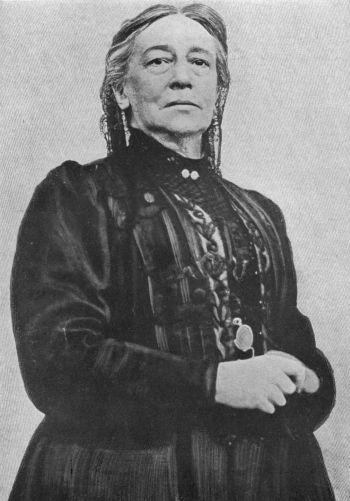
Lady Gregory, who has been ill the last fortnight is, we are very pleased to say, now wholly convalescent. She is devoting her spare time to planting trees of which she has put down a very large quantity already in her beautiful and picturesque demesne.
THE CONNAUGHT JOURNAL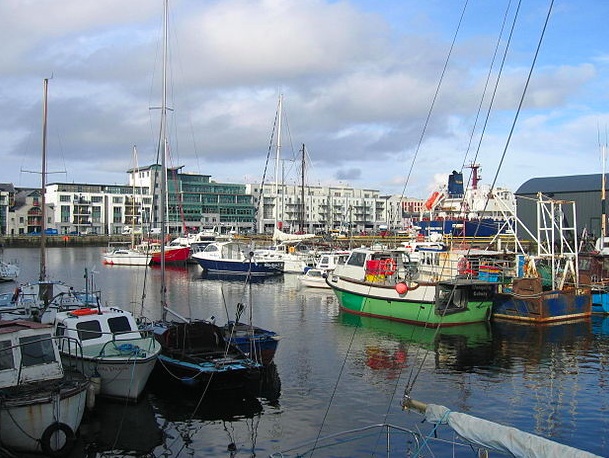
Wikimedia Commons
15th October, 1840
NEW GALWAY DOCKS
On Monday last a great concourse of persons assembled upon our new Docks and Quays to witness the first vessel into our new and splendid basin; and had not the circumstances been unexpected the crowd would have been much more numerous. Our new Docks are still in an unfinished state, and will not be perfectly complete before a month or six weeks when it is expected they will be given up by the contractors to the Harbour Commissioners. The first vessel that entered the basin was the Galway Ark, one of the Liners belonging to this Port, and she certainly was brought in in gallant stile by our expert and experienced Pilot, Mr. Patrick O’Halloran. The Galway Lass and the Margaret John subsequently entered the Basin.
Photo: Walter Smith
Creative Commons
Last Tuesday night, between nine and ten o’clock a numerous cavalcade appeared at Cappa, the seat of Richard Gregg, Esq. They may be said to consist of between forty and fifty at the least; two mounted on each horse. A party of ruffians entered the Gate-keeper’s Lodge to search for arms. They were equally mischievous as insolent and injured every article in their way, until they discovered a fouling piece which they took with them. We learn they traversed a very considerable part of the county.
Richard Gregg, Esq., with commendable zeal and manly spirit, pursued the course which he understood the above banditti had taken and having with him two or three resolute men, it is much to be lamented that he had not been able to fall in with them. Had Mr. Gregg been timely advised of the circumstance they would not have escaped, but the trepidation of the gate-keeper prevented him from venturing out, more timely, apprise his master of the outrage and plunder which had been committed by these unpleasant visitors.

