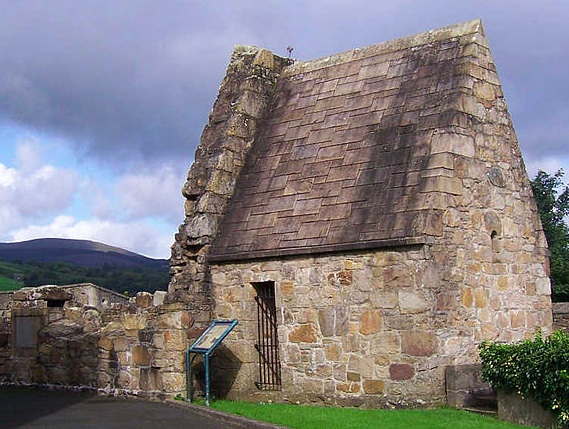
Evening Post Vol CVIII Issue 108 2nd November 1929 (abridged)St Lua’s church, Killaloe Uploaded by Chris55 Wikimedia Commons
AN ISLAND GOES.
Friar’s Island, Killaloe, where eight centuries ago the pious monks of St. Lua’s Oratory preached Christianity to the Irish, will soon be a memory that has sunk beneath many waters. The waters are those of the Shannon, which will rise to cover it when the reservoirs for the new power scheme for distributing electricity about the countryside are filled.
Ireland could not see the old place go without a look, without a sigh, and without a prayer, so on a Saturday in July many people from Tipperary, Limerick, and County Clare gathered there to bid the island farewell and hear the priests celebrate Mass there for the last time. Mass had not been said there since the Oratory fell to ruin all those centuries ago. The monks have gone, the voices which were heard at Matins or at Vespers are for ever silent, and now the island itself has followed them to rest.
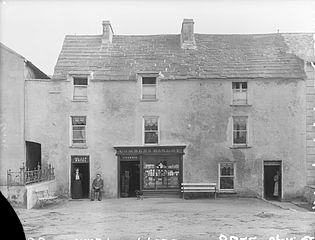
Hawera and Normanby Star Vol LXXIV 4th March 1918 p5Comber’s Bakery, Ennistymon National University of Ireland via Wikimedia Commons
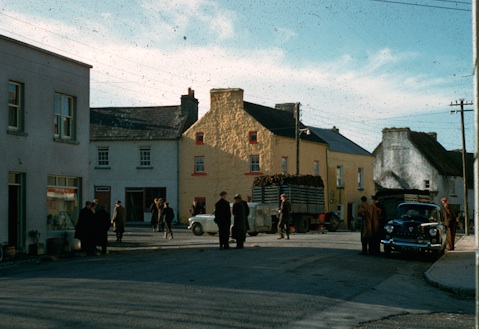
It is reported that the £5,500 stolen from a bank manager at Ennistymon, County Clare has been restored, with a note stating that no robbery was intended and the money was taken merely to prevent its use at the fair to buy cattle, which were to be exported.
Recorder 28th January, 1920 p1Photo: EO’D
(abridged)
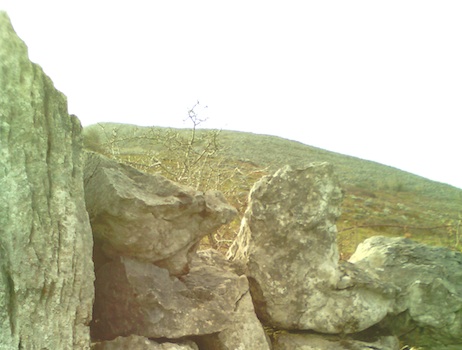
The Daily News correspondent in Dublin says that 2,000 American rifles were landed on the coast of County Clare and were brought ashore in small quantities. They were distributed before the military authorities knew that any arms had been landed. The Government regards the position in County Glare as serious.
Irish subscriptions to the Sinn Fein national loan amount to £1,500,000. The sum of £4,250,000 has been contributed in America.
New Zealand Tablet Vol XX Issue 22, 18th March 1892 p27
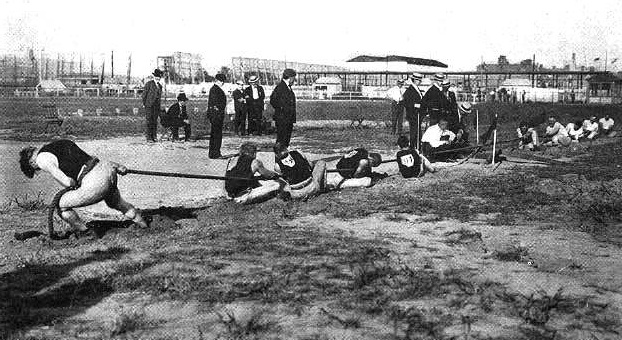
1904 tug of war Wikimedia Commons
THE IRISH WIN IN ADELAIDE.
(Sydney Freeman’s Journal.)
The Irish team, under Captain M. Ryan, have in the International Tug-of-War at Adelaide, South Australia, followed the example of their countrymen in Melbourne. In Melbourne Captain Flannagan carried the boys through without defeat, and secured the first prize of £100. In Adelaide the stout-hearted Irish also came through the tournament with an unbroken record against 17 competing teams, and carried off the bag of 100 sovereigns.
(Details on In the News at theburrenandbeyond.com)
The Catholic Press 13th June, 1907 p6
Father Fitzgerald OFM (abridged)
At the very period of the year when travellers from other lands are trooping to the beauty spots, of Ireland, her own sons and daughters are bidding farewell for ever to her shores. The column of the morning papers devoted to fashionable intelligence relates daily that various honorables with their ladies and retinue have arrived from abroad at Kingstown, but the emigrant ship may bear away her freight of the young and strong unnoticed and unchronicled save by widows wails and the ruined fireside. The emigration season sets in now in Ireland as regularly and as surely as the fishing or the shooting seasons.
To accommodate the thousands, or rather the scores of thousands, who depart yearly, excursion trains are run to the seaports, and large steamers compete with each other in speed and cheapness of transit to America. Indeed, it is a sad thing to meet one of those American excursion trains, still worse to occupy a place in the train even for a short journey, for scenes of great affliction occur at every station.
A bird of ill-omen appeared in Galway Bay on the 27th of the present month of April. This was an emigrant steamer the first of the season. Another will call in ten days more and take up her own portion and those who were left behind through over-crowding on Friday morning. About a fortnight ago a large poster, printed in red lettering, appeared on the dead-walls and gate-piers of Galway, announcing the fact that the Salmatian of the Allan Line would call at Galway on the above date. Details followed concerning the superior accommodation, and the lowness of the fare across. The news was carried through the hills of Connemara and out to the Isles of Aran and along the coast to Inishbaffin, and in answer to the call, like to the beacon-fires of old, many a youth and maiden was up and doing. Many a one humped the last Irish of seaweed up the barren hillside or spent the last dark night watching the phosphorescent gleam on the dark waters that tells of the herring shoal, or walked six miles, if not more, to the town and back to sell a quart or two of milk.
In almost every townland in the surrounding country there are celebrated several American wakes. Your readers may not know that this is the title given to the domestic celebration that is held in every home, however humble it may be. On the eve of the departure of one of its inmates to America, A quarter-cask of porter is provided, or some good poteen, and the neighbours get word, and music is supplied by a piper or an expert on a melodeon or a flute, or a concertina, or all in turn. The boys, and the girls take the floor, and the rinca fada, the curcaher, or the Curuckther are faithfully performed, until day breaks. Then, weeping takes the place of laughter, and the whole house turns out to accompany the parting one to the station, except the old grandfather or grandmother, who rocks the cradle with their foot and minds the house.
Wairarapa Daily Times, Volume LIX, Issue 9225 19th November 1908 p5Coole Park, Gort EO’D
One of the most interesting survivors among the few who still remain of the noble band of women who nursed with Miss Florence Nightingale in the Crimea has passed away (writes a London correspondent), in the person of Mother Mary Aloysius Doyle, at the Convent of Mercy, Gort, Co. Galway.
The venerable lady had attained the great age of ninety-four years, but her faculties were unimpaired, and only last July she wrote a beautiful letter of sympathy and good wishes on hearing of the fate of the veterans, destined to help the declining days of the survivors of the Crimea and the Mutiny. The great value of the services rendered by the first party of nurses who went out with Miss Nightingale led Mr Sidney Herbert to request Miss Stanley, sister of the former Dean of Westminster, to select further reinforcements for her and letters were written to all the convents in Ireland for trained volunteers. Two other Roman Catholic Sisters who accompanied Miss Nightingale are happily still with us as Sister Mary Stanislaus RRC and Sister Mary Anastasia RRC who are in the Hospital of St John and St Elizabeth, the former of whom, it is pleasant to record is in good health and has may interesting memories to tell of those stirring days.
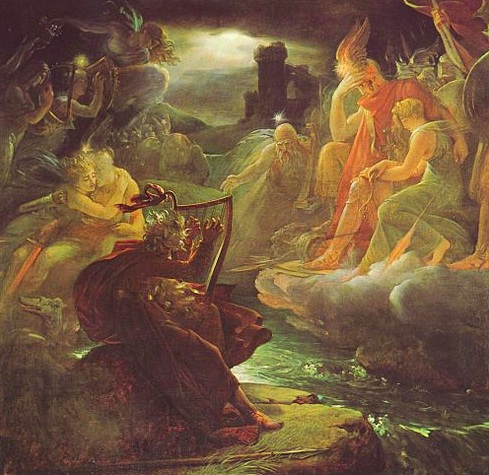
A Reading Book in Irish History P.W.Joyce LLD – One of the Commissioners for the Publication of the Ancient Laws of IrelandOssian François Pascal Simon Gérard Wikimedia Commons
Longmans, Green and Co. London, New York and Bombay. Dubln: M.H. Gill and Son 1900
THE CHANT OF THE FAIRY TO CONNLA OF THE GOLDEN HAIR.abridged
A land of youth, a land of rest, a land from sorrow free;
It lies far off in the golden west, on the verge of the azure sea.
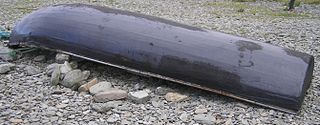
A swift canoe of crystal bright, that never met mortal view
We shall reach the land ere fall of night, in that strong and swift canoe:
We shall reach the strand of that sunny land From druids and demons free;
The land of rest, in the golden west, on the verge of the azure sea!
A pleasant land of winding vales, bright streams, and verdurous plains,
Where summer, all the live-long year, in changeless splendour reigns;
A peaceful land of calm delight, of everlasting bloom;
Old age and death we never know, no sickness, care, or gloom;
The land of youth, of love and truth,From pain and sorrow free;
The land of rest, in the golden west, on the verge of the azure sea!
There are strange delights for mortal men in that island of the west;
The sun comes down each evening in its lovely vales to rest:
And though far and dim on the ocean’s rim, it seems to mortal view,
We shall reach its halls ere the evening falls, in my strong and swift canoe;
And ever more that verdant shore our happy home shall be;
The land of rest, in the golden west, on the verge of the azure sea!
It will guard thee, gentle Connla of the flowing golden hair,
It will guard thee from the druids, from the demons of the air;
My crystal boat will guard thee, till we reach that western shore,
Where thou and I in joy and love shall live for evermore:
From the druid’s incantation, from his black and deadly snare,
From the withering imprecation of the demon of the air,
It will guard thee, gentle Connla of the flowing golden hair;
My crystal boat will guard thee, till we reach that silver strand,
Where thou shalt reign in endless joy, the king of the Fairy-land!
Tribune (Melbourne, Vic.) 25th July 1914 (abridged)
Irish Volunteer memorial – Irish War of Independence Leo Broe (1899–1966) Photo: Jtdirl Wikimedia Commons
Here is what the London Times has to say in regard to the Irish Volunteers: —
‘We in Great Britain, with our forty-one million people, and with all the resources of civilisation at our backs, have not been able to raise in seven years as many Volunteers as Ireland, with her five million people and against the intentions of the Government, has been able to raise in about as many mouths. The Lord Chancellor calls all the Irish Volunteers illegal and unconstitutional. So undoubtedly they are. It is a lasting reflection upon the Government that their creation should ever have been permitted. But at the same time the Irish Volunteers deserve this credit —namely, that with every obstacle thrown in their way, and with not a shilling of public money paid to them, they are doing better than the Territorials, who have been petted and pampered by all sorts and conditions of men, and cost us three and a half millions of good money annually.’