On a bleak grey mountaintop at the edge of the world there lived a badger. To his friends he was known as Coley the Snuffler. That was his name. Coley the Snuffler liked his name because it described him very well. He loved roots and grubs and he could snuffle them out better than any other badger around. In fact he was so good he was quite round, even for a badger. But he didn’t mind.
“All the more for you to love” he’d say and waddle off, chuckling to himself. His friends chuckled also, for they loved Coley very much indeed.
Coley’s best friend in the whole wide world was Daisy. He was very pleased to have such a beautiful little flower as a friend and he minded her well. She was, after all, much smaller and far more delicate than him. With his soft warm coat he sheltered her from the cold winds that gusted down the rocky slopes of his home. With his broad grey nose he pushed pebbles around her to protect her slender stem. With his great wide feet he dug up the richest loam on the hillside and placed it at her roots to nourish her and with his great grey bulk he stood, like a wall, between her and any strange animals that chanced to pass that way in case they crushed her. At night when Coley rested between snuffles he sat beside Daisy and gazed at her beauty. Though asleep Daisy would feel the great heat radiating from him. It was so pleasant she’d uncurl her little petals to bask in his warmth. And they talked. They talked as only true friends can, heedless of the glances of passing animals who thought they were a most peculiar sight indeed.
Today’s Daily Prompt is to write about something that happened over the weekend as though it’s the top story on your local paper!!
GLASS SHATTERED IN PRIVATE RESIDENCE
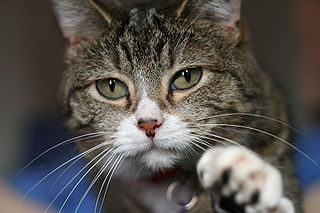
A large glass was shattered on Sunday near Galway . Lila a four-year-old domestic feline caused the collision when she leapt from a windowsill to the kitchen table in an act that has been described as complete insanity. She struck a glass of water placed on there by owner, Norma. No injuries resulted from the collision. Preliminary investigations suggest that Lila’s take off was insufficient to maintain the angle and level of projection necessary to complete the manoeuvre. Norma stated that she was traumatised by the incident, and questioned her cat’s level of intelligence. “How could she not have seen it? The Clown. I mean it was a large glass, and one of a set.”
Lila was not available for comment. She absconded through the kitchen window and is currently residing in the rhododendron bushes out back.
Malaria is ‘Normal’ in the sense that it is common. It should NOT be either.
In 2010 approximately 219 million cases of malaria were documented.
In 2010 between 600,000 and 1.2 million people died from the disease.
Many were children.
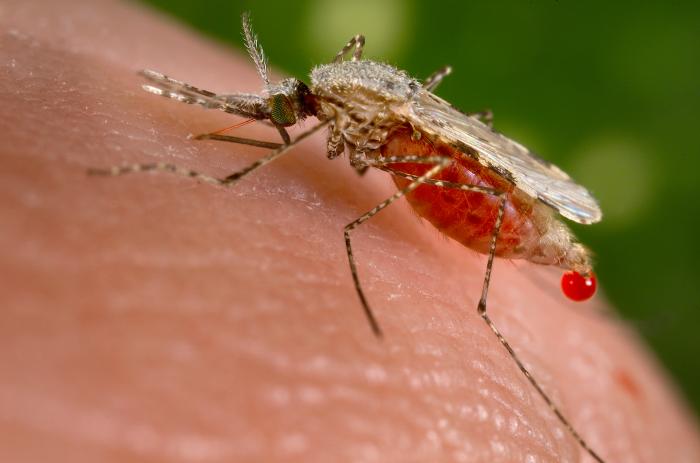
Agnes was one. An Anopheles stephensi mosquito is obtaining a blood meal from a human host through its pointed proboscis. Note the droplet of blood being expelled from the abdomen after having engorged itself on its host’s blood. This mosquito is a known malarial vector with a distribution that ranges from Egypt all the way to China. Rsabbatini at en.wikipedia Agnes
She was born at twilight, on a goatskin rug.
There were candles to guide her.
She didn’t cry.
For a moment, I was worried.
Christiana said that was fine.
“When they breach this world peacefully they have no reason”.
She said.
Agnes looked around her in the warm huddle of my room.
And then.
Unfolded.
Flexed.
Unfurled.
A small, damp butterfly.
Agnes.
She saw me, and I her.
And I believed in God.
In Allah.
In Buddah.
We shared the wonder of each other’s presence.
Wrapped in the gentle whisper of the flames.
I hold her now.
When she teethed she bit my chin.
I jiggled rhythms with my jaw
and hummed tuneless melodies while
She, Agnes, dribbled joy.
Our lashes touched.
We smiled.
I thought it was an earache.
That twilight.
On the goatskin rug
When Agnes shook her head from side to side
And screamed.
So I held her close.
And fed her.
She clung.
She cried.
Higher and louder.
I craved pain.
To lessen hers.
I thought it was an earache.
She got hot.
So very hot.
It frightened me.
With damp cloths I sponged her down.
And snapped.
At my man.
My fear became his. He went for help.
Christiana.
Christiana found a bite.
A bite so small it hardly seemed to matter.
But it did.
With nails of poison it ruptured Agnes and all around who bore witness.
My heart convulsed.
As Agnes did.
There.
Before us.
On that goatskin rug.
Once upon a time she liked its harsh tickle against her toes.
My man. He would take a corner and brush it against her leg, pleated with fat.
Together they would smile.
Christiana talked too quickly.
Too loudly.
She could not face me. Nor I her.
So I turned from her.
And from him.
My man.
Agnes oozed diarrhoea through her nappy
and moaned.
Sometimes she cried, but it was not the same.
She no longer demanded my attention.
The bite claimed hers.
We shared the twilight, the dark and the dawn together.
Once?
Twice?
Christiana left. When?
My man.
He sat close by.
Old.
Silent.
I talked to Agnes.
I told her stories she had heard before.
Her chest bubbled up and down.
Up and down.
I sang to her.
My voice grew hoarse.
Sometimes I cried.
Quietly.
I put a yellow ribbon in her hair.
That single curl.
A question mark.
Her skin matched its hue.
She lay small, a wilted buttercup.
And died.
Agnes.
I hold her now, on our goatskin rug.
Her name is Agnes.
Are there certain things you won’t post in certain places? Information you’ll never share online?
I took my Nanna shopping for the day and insisted she wore a light jacket. She wasn’t too keen but I explained that there’s all sorts of weird bugs out these days and I didn’t want her getting sick. She tutted at me and called it nonsense – and then diagnosed the infirmities of the world in two words as we left the house.
While I am generally loathe to write about or call attention to topics of a delicate nature in a public forum, I feel compelled to share this nugget of information. It appears that the majority of illnesses today are, according to Nanna, caused by ‘wandering fart’.
You might think this a feasible explanation for stomach cramps and/or discomfort in the lower bowel, and you’d be right. However, Nanna says that from the second you’re born wandering farts develop, advance and mature along with you. Eventually they invade every square inch of your body. And not just yours. Everyone’s. No one escapes. No one. Who hasn’t met someone full of hot air at some point in their lives? And who can honestly say they’ve never acted like that themselves? Not me and certainly not Nanna.
I have spent a considerable amount of time perusing medical texts on this illness. I have supplemented my research with E.R., Grey’s Anatomy and House and cross-referenced potentially hopeful results with C.S.I., N.C.I.S. and Law and Order,and realised that very little has been written about it. Consultations with doctors, surgeons, oncologists, coroners, detectives, toxicologists and forensic specialists confirmed this fact. So I have decided (as I said) to overcome my embarrassment and share Nanna’s proven cure;
“Have a glass of water and a good laugh – and get over yourself’.
I hope this helps.
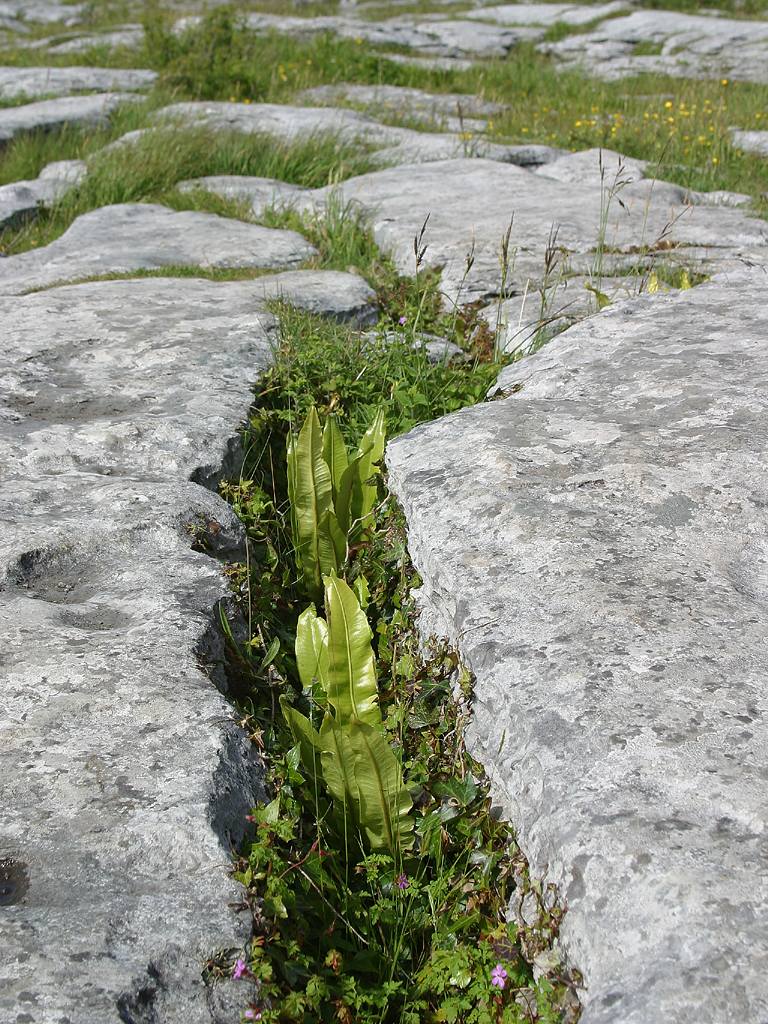
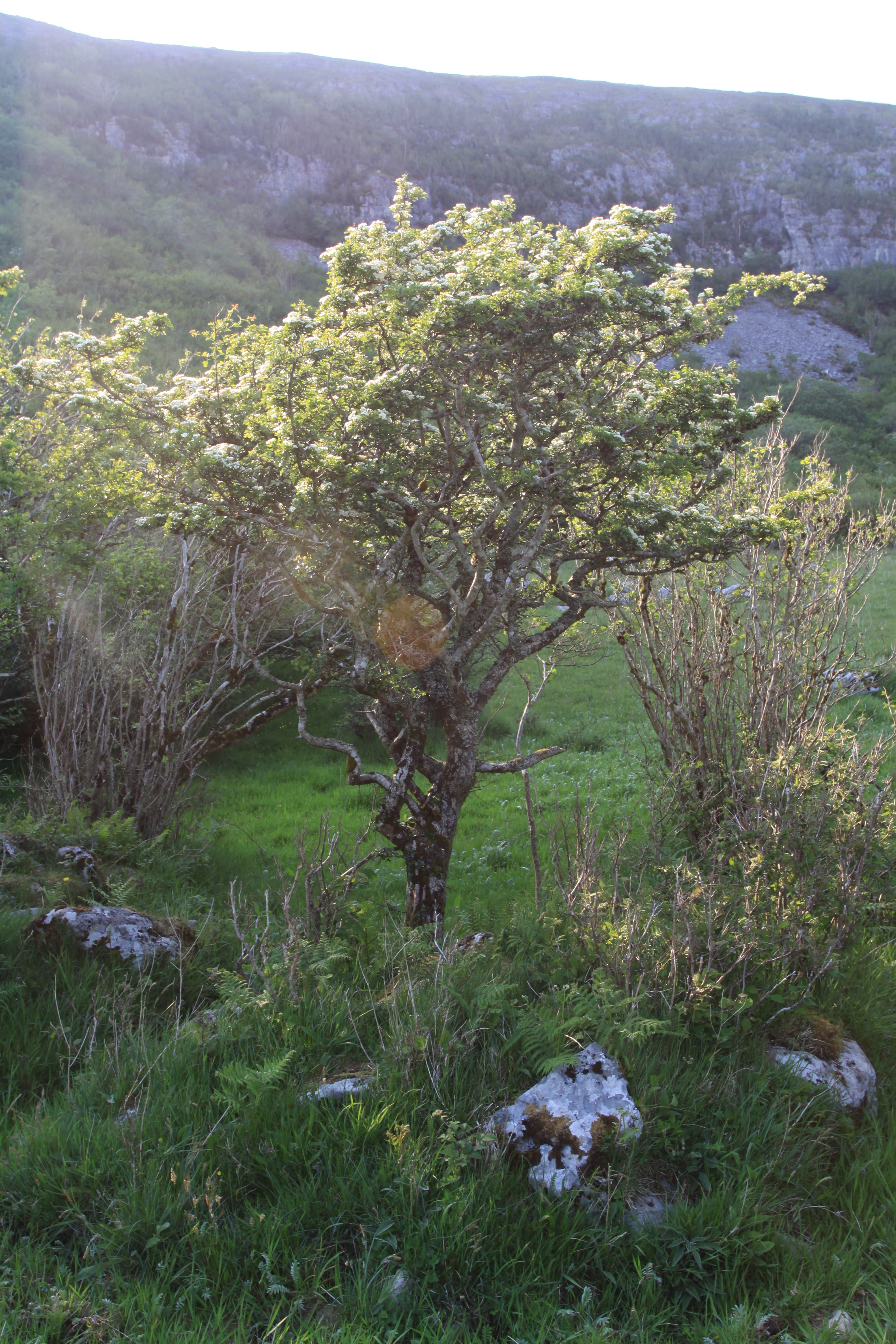
Behind me are the ruins of an early Christian church, a holy well and the cave of a hermit. The track meanders downward, across a field and onto a limestone terrace. It’s quiet, beautiful and relaxing. We share a cheese sandwich and a flask of water. Nothing happens. Perfect. The Burren – West of Ireland.
Adapted from
William Bennett, Narrative of a Recent Journey of Six Weeks in Ireland. London: C. Gilpin, 1847, pp. 25-9.
We spent the whole morning visiting these hovels, followed by an ever increasing group of wretched creatures, who begged for help. We avoided houses known to contain the fever. Some were easily identifiable by the small coming from them.
And now language utterly fails me in attempting to depict the state of the wretched inmates. I would not willingly share the harrowing details; but these are the FACTS as they stand. It is our responsibility as Christians, in a Christian land, under a Christian Government to take note.
My hand trembles while I write. The scenes of human misery and degradation we witnessed haunt my imagination, with the vividness and power of some horrid and tyrannous delusion, rather than the features of a sober reality.
We entered a cabin.
Stretched in one dark corner, scarcely visible, from the smoke and rags that covered them, were three children. They huddled together, too weak to rise, pale and ghastly, their little limbs perfectly emaciated. Their eyes were sunken, voices gone, evidently in the last stage of starvation.
Crouched over the turf embers was another form, all but naked. It stirred not, nor noticed us.
On some wet straw, strewn on the floor lay a shrivelled old woman. She moaned piteously, imploring us to give her something. Above her, on something like a ledge, was a young woman, with sunken cheeks. A mother I have no doubt. She scarcely raised her eyes in answer to our enquiries, but pressed her hand upon her forehead, with a look of unutterable anguish and despair.
Many cases were widows, whose husbands had recently been taken off by the fever. The only source of income for these women died with their partners. In other homes the husbands or sons were prostrate, under that horrid disease. Their suffering was the result of long-continued famine and low living, in which first the limbs, then the body, swell most frightfully, and finally burst.
We entered upwards of fifty of these tenements. The only difference between them was the number of the sufferers within. It was difficult to count them until-the eye adapted itself to the darkness, or they were pointed out, or were heard, or some filthy bundle of rags and straw was perceived to move.
The children were the most heart-rending spectacle. Many were too weak to stand, their little limbs attenuated, – except where the frightful swellings had taken the place of previous emaciation.
The childlike expression had left their faces. Many of them were remnants of families, crowded together in one cabin; orphaned little relatives taken in by the equally destitute, and even strangers.
These poor people are kind to one another to the end.
In one cabin was a sister, just dying, lying by the side of her little brother, just dead.
I have worse than this to relate, but it is useless to multiply details, and they are, in fact, unfit.
These people hardly complained. When I asked what was the matter, the answer was the same -‘Tha shein ukrosh,’ – ‘we are hungry’. We truly learned the terrible meaning of that sad word ‘ukrosh’.
My friend the clergyman distributed tickets for meal as best he could. He told me that wherever we went it would be the same. All over the country. Even worse in the far off mountain districts. We had visited near the town, where some relief could reach. It was my full impression that one-fourth of those we saw were dying. They were beyond the reach of any relief. Many more would follow.
This day can never be effaced from my memory.
These were our fellow-creatures.
Children of the same Parent.
Born with our common feelings and affections.
With an equal right to live as any one of us.
With the same purposes of existence.
The same spiritual and immortal natures.
The same work to be done.
The same judgment-seat to be summoned to.
And the same eternal goal.
Ar dheis Dé go raibh a n-anamnacha.
Photo: Norma Scheibe
We remember them. At the rising of the sun and at its going down, we remember them.
At the blowing of the wind and the chill of winter, we remember them. At the opening of the buds and in the rebirth of spring, we remember them.
At the blueness of the skies and in the warmth of summer, we remember them. At the rustling of the leaves and in the beauty of autumn, we remember them.
At the beginning of the year and when it ends, we remember them.
As long as we live, they too will live; for they are now a part of us, as we remember them.
When we are weary and in need of strength, we remember them.
When we are lost and sick at heart, we remember them. When we have joy we crave to share, we remember them.
When we have decisions that are difficult to make, we remember them. When we have achievements that are based on theirs, we remember them.
As long as we live, they too will live; for they are now a part of us, as we remember them.