
THE CATHOLIC PRESS, 16TH JANUARY, 1930
“THE ARK” IN IRELAND
Primitive Church in County Clare.
A primitive “church on wheels” is still preserved as a memorial of old times in a country church in County Clare, not far from Loop Head. In this region of small villages and scattered farms and cottages the parish priest, some 80 years ago found it impossible to obtain from the Protestant landlords even the smallest site for a church. He had a little wooden chapel made, very like the foreman’s hut one sees where a new road is being made or a building erected.
A shelf at one end provided a support for an alter stone. The door at the other end was opened wide when Mass was said. The hut was placed on four small wheels and moved round the district, now to one cross-road or roadside grass patch, now to another, for the Sunday Mass.
In the fine parish church long since erected, the hut that once was a movable chapel is kept on a raised platform in the aisle. It is locally known as “The Ark.” The beams that form the framework of its base show numerous marks of the knife, for emigrants starting for America, and later soldiers going to the Great War, took with them chips from “The Ark” as something like relics from the wooden chapel consecrated by so many Masses said in the old days, often to congregations kneeling in the mud and driving rain of a winter Sunday.
Author: The Burren and Beyond
B.A., M.A.(Archaeology); Regional Tour Guide; Dip. Radio Media Tech; H.Dip. Computer Science.
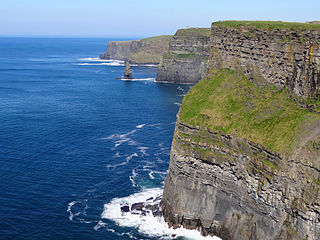
Adventurous Boys from County Clare – 1853!
Creative Commons
https://widgetworld3.wordpress.com/podcasts/
ADVENTUROUS BOYS
On last Saturday, there passed through Galena, by stage, two boys, one of four and the other seven years of age. They left the county of Clare, Ireland, the first of January, for Dubuque (Dublin?) and came the whole way unattended by relatives or particular friends. When they left New York, on their journey westward, they had but $2.50 with which to pay their expenses; but when they arrived at Chicago, the sum had grown to $6.
Weakness and confiding faith are, often, ever a surer protection than strength. Whatever may be the defects in the American character, at the present times, a want of sympathy is not due of them. – Galena Gazette
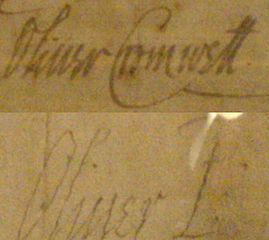
Cromwell’s slaves – 1658
Wikipedia.org
THE INTERMOUNTAIN CATHOLIC 1ST JULY 1905, P3
CROMWELL IN IRELAND
IRISH PEOPLE SOLD INTO SLAVERY
The London “Athenaeum” has published the following letter:
23 Leeson Park, Dublin
In your issue of April 29, Mr W.F.P. Stockley remarks that “many people would like to have the evidence for and against Cromwell’s sending Irish prisoners to the West Indies.” Prendergast, in his “Cromwellian Settlement of Ireland,” (London, Longman 1865) quoting in part from the Ofder Books of the Commonwealth of England for the Affairs of Ireland, preserved in the Record Towre (sic.), Dublin Castle, wrote as follows:
“After the summer Assizes of 1658, Sir Charles Coote, Lord President of Connaught, and Colonel Sadleir, governor of Galway, were directed to treat with Colonel Stubbers or other merchants about having a properly victualled ship for eighty or one hundred prisoners ready to sail with the first fair wind to the Indian Bridges, the usual landing place in the Barbadoes, or other English plantations, thereabouts in America. These were proprietors who had been sentenced to death for not transplanting but had been pardoned by his excellency. At Barbadoes the prisoners were to be delivered to certain merchants (who were to pay the cost of transportation), all except ten, who were to be consigned to a person to be speedily named. This was a Mr. Edward Smyth, a merchant resident at the Barbadoes. His lot, however, was afterward increased to twelve, ten men and two women, and upon receiving them at the Indian Bridges, or elsewhere in that island, he was to pay Colonel Stubbers four pounds per man for transportation and victuals.”
Prendergast gives in a series of footnotes references to the various pages of the Order Books in which the entries are to be found which justify his statements. In Hardiman’s “History of Galway”, p 134 it is stated that Stubbers transported from the city to the West Indies no fewer than 1,000 persons, whom he there sold as slaves. A letter to Lord Byron in Carte’s “Collection,” vol. II, p. 412 asserts that the thirty survivors of the citizens and garrison of Drogheda “all that were left of them” after five days of massacre were shipped to the West Indies to be sold as slaves.
WILLIAM F. DENNEHY
O’Keefe 1231 – A Giant of a Man
Wikipedia.org
THE MAITLAND WEEKLY MERCURY 28TH MAY, 1910
An interesting archaeological discovery was made at Ballinahalla, near Moycullen, County Galway, Ireland. Some workmwn came upon a complete skeleton measuring 8ft 5½in. and subsequently unearthed an old sword bearing the following inscription, in Gaelic – “Donach OKeefe, A.D. 1231.
Lynch – 1864
Wikipedia.org
QUEENSLAND TIMES, IPSWICH HERALD AND GENERAL ADVERTISER
28TH MAY, 1864 P4
ORIGIN OF LYNCH LAW
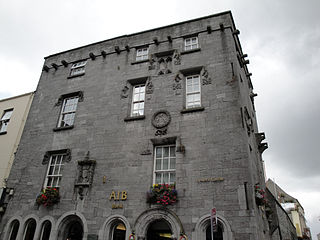
The office of Warden of Galway has become memorable in the literary world since Maturin dramatised the story of the rigid justice administered by Warden Lynch in ordering the execution of his son, in the year 1500. Hardiman, in his History of Galway, gives the particulars at length, which are shortly as follows:-
Warden Fitzstephen Lynch formed a friendship with Gomez, a rich merchant of Cadiz, and had his son, a youth of nineteen, with him on a visit. The Warden’s only son, two years older than young Gomez, and the Spaniard were constant companions and friends. Young Lynch became attached to Agnes, the daughter of a neighbouring merchant, but she preferred Gomez. Lynch, maddened by jealousy, stabbed his friend with a pinnard on the brink of the sea, and hurled the body into the sea. Immediately repentance came, he accused himself of murder, and was conducted to prison.
His own father sat as magistrate in judgment upon him, and from his lips sentence of death was pronounced. The populace became tumultuous, and mediated a rescue, when so rigid was the magistrate in the administration of justice, and so exalted his virtue, that on the night before the day appointed for the execution he embraced his son, led him out, and had him executed from a window!
The house still stands in Lombard street, which is yet known by the name of the “Dead Man’s Lane.” Over the window may be seen, carved in black marble, the representation of a human skull with two bones crossed underneath, and is “supposed,” says Hardiman, “to have been put up by some of his family as a public memorial.” This house is always an object of interest to the tourist, and the first to which his attention is directed by his guide in Galway.
Fox, Canary, Parrott, Rabbitt – 1911
Rembrandt (1606-1669)
The Yorck Project – Wikipedia.org
HOPKINSVILLE KENTUCKIAN NOVEMBER 21ST 1911, P2
QUEER KINDS IN MARRIAGE
ANSONIA, CONN
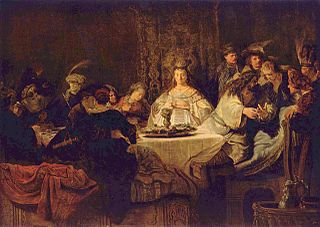
“My grandfather married a Fox, my father a Canary, my brother a Parrott, and I’ll go them one better”, said John R. Welsh, who will soon wed Mrs Eleanor Rabbit of this town.
In 1838 Michael Welsh Married Mary Fox at Feakle, County Clare, Ireland.
Twenty-five years afterward his son Peter led Alice Canary to the alter in New Haven
Richard, the eldest son of Peter, last year found his bride in Miss Edna Parrott, and John, next in age, will contribute to the list with Welsh Rabbit, as he puts it.
In Derby recently Walter Graves married Miss Anita Coffin.
Thinking ahead – 1930
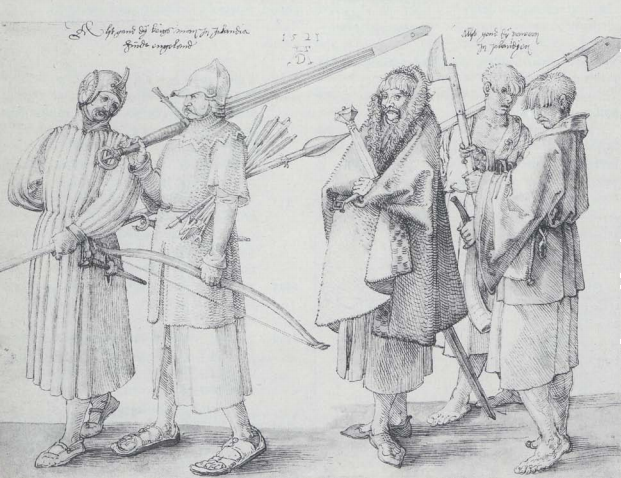
Attributed to Albrecht Dürer – 1471 -1528 (Woodcut)
The Cumberland Argus and Fruitgrowers Advocate 1st December 1930
AHEAD OF HIS TIME – 1930
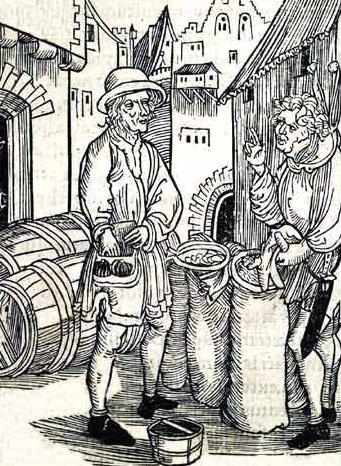
A Galway shopkeeper, who died a few months ago was firmly convinced that the time would come when the banks would not honor their notes, and that the notes would be worthless. In a number of hiding places in his house and shop he kept his savings hidden in the shape of gold and Treasury notes. In one room he had £200 in gold in a jar concealed under the door. He had another £200 in a chest on the landing of the stairs. Altogether he had over £800 secreted. After his death the hiding places were discovered.
Mary Glynn, Feakle – Survivor of The Titanic – 1912
Wikipedia.org
THE WASHINGTON HERALD, 22ND APRIL, 1912 P5
STEERAGE SURVIVOR TELLS STORY OF WRECK
======================================================
Miss Mary Glynn,visiting relatives in Washington, praises heroism of passengers on Titanic – women tried to save men.
(Miss Mary Glynn, nineteen years old, was en route from her home in Feakle, Co Clare, Ireland, to the home of her cousin, Mrs D.D. Courtenay, 715 North Capitol Street.
Miss Glynn arrived in Washington last night, and gave a detailed story of the disaster. She declared that the Titanic was running at top speed when she struck the iceberg, and bases her statement on the fact that she was infomred by a member of the crew, just before retiring on the night of the accident that the Titanic “was being thoroughly tested, all of her boilers being in use for the first time.”
Miss Glynn’s story of the accident, the escape of the few passengers who were saved, and the final plunge of the ill-fated ship, is interesting.
In a rich Irish brogue she commanded attention from the beginning of her recital, and covered thoroughly every detail of the disaster. Miss Glynn siad;
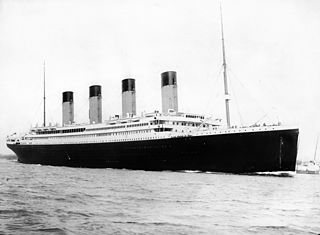
“When the Titanic left Queenstown several of the steerage passengers were given compartments in the bow. They were so near the engine room that they were unable to sleep, and after the first day we other passengers shared our compartments with them. At the time of the disaster, six persons, instead of the regulation four, were asleep in my compartment. The Titanic struck at about 11.45 o’clock, and all of us were thrown from our bunks. We were badly frightened, but the idea that the ship was in danger never entered our minds. We did not think it possible that such a giant boat could have been so badly damaged.
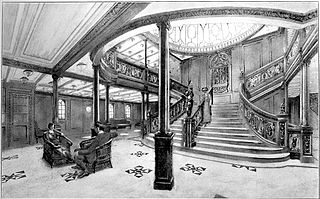
From “White Line Triple Screw Steamers” booklet, White Star Line
Wikipedia.org
“When we asked members of the crew what the trouble amounted to, they ridiculed our fear, saying the boat was in absolutely no danger and we would proceed at once. Several minutes later, however, we were aroused and told to make for the lifeboats. There never was a more courageous set of men and women than the occupants of the steerage. The men behaved admirably. The acme of heroism was reached when several of the single women, who had been conversing in a secluded corner, came forward and insisted that they remain behind, and that husbands be permitted to accompany their wives. It was splendid.
“When our boat was lowered it contained forty-odd passengers, the only men in the boat being two Celestials, who were so badly scared that they cowered in the bottom and refused to move, and the members of the crew. While we were being lowered, the tackle became caught in some manner, and a lifeboat descending from the upper deck was about to strike us. One of the girls in our boat, who was one of the party which so gravely proposed the escape of the husbands as well as the wives, with rare presence of mind took a small clasp knife from her pocket and severed the rope. The sailors then began to pull with might and main in order to clear the boat from the danger zone.
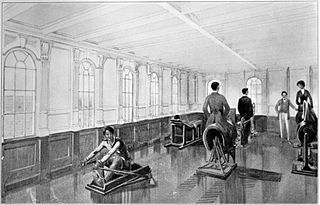
From “White Line Triple Screw Steamers” booklet White Star Line
Wikipedia.org
“When we were about half a mile away they rested on their oars and we watched the Titanic, rolling and bobbing like a cork. All her lights were burning, and over the water we caught the strains of “Nearer, My God, to Thee”. Finally the Titanic ceased rolling, seemed to hesitate a moment, and plunged her bow into the ocean, and, a moment later was engulfed by the waves. Several moments after she had disappeared there was a terrific explosion, which threw the water in a turmoil, and fragments of the ship were hurled high into the air. I supposed the boilers had exploded.
“After picking up two men who were swimming we proceeded to row around and the women in the boat made torches of their hats, handkerchiefs, and other articles of clothing, thinking a passing ship might thus be attracted. This availed nothing, however, and after we had been drifting more than seven hours, we hailed the Carpathia and were taken aboard.
MAN DISGUISED AS WOMAN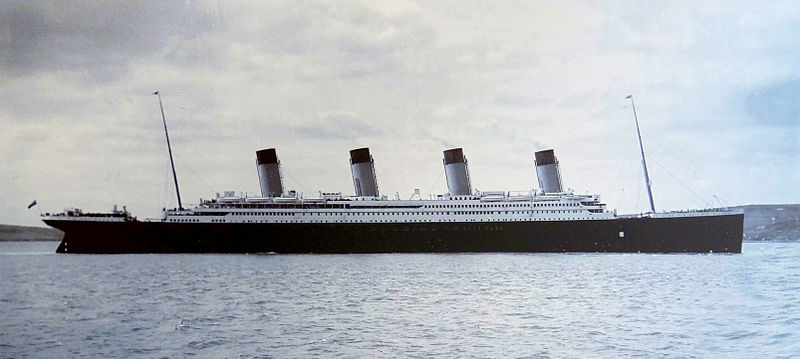
Cobh Heritage Centre, museum in Cobh, Ireland.
Wikipedia.org
“Most persons think the report that one of the men disguised himself as a woman in order to escape is a manufactured tale. It is not. That man occupied a seat in the boat I was in, and I never looked with greater disdain upon any creature than he. He was an object of scorn to every man, woman, and child in our boat. Just imagine, a strapping man, twenty-two years old, who admitted that he donned feminine attire and wrapped a towel around his head in order to fool the officers who were placing the passengers in the boats.”
Miss Glynn saved nothing from the he wreck, except the clothing she wore. She said that she was well treated on the Carpathia and commended Capt. Rostron, of that ship, for his bravery. Miss Glynn declared that a lifeboat was sighted two days after the wreck, but the Carpathia crew found only two dead bodies in the boat and they were not taken aboard.
It is probable that Miss Glynn will be summoned to testify before the Senate asinvestigating committee, as she is the only steerage passenger who seems to have a clear conception of the conditions existing in the steerage on the morning of the wreck.
Better late…1913
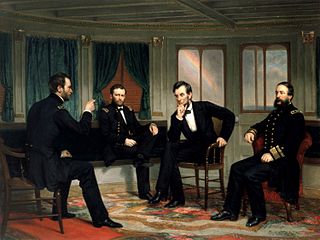
Sherman, Grant, Lincoln and Porter, discussing plans for the last weeks of the Civil War, March 1865
Oil on canvas – c. 1868 by George Peter Alexander Healy (1818-1894)
White House Historical Association
THE CITIZEN 5TH AUGUST, 1913 – OUR MAGAZINE PAGE (6)
GOSSIP FROM WASHINGTON
From County Clare, Ireland, recently came $250 to the conscience fund of the treasury. It was the first contribution from Europe in many years and was sent by a civil war veteran, who said that during the conflict he had made “false returns”.
Lola Montez 1905
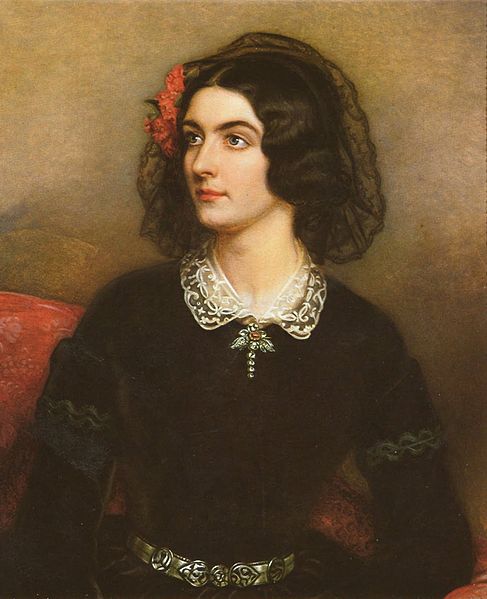
Wikipedia.org
The Star, (PA) 9th August 1905 p 1
LOLA MONTEZ
At one time there was much commercial and social intercourse between Ireland and Spain. Galway and Waterford were the chief Irish ports engaged in this trade. To this day the Spanish type of beauty is discernible among the Galway girls. Probably the most famous result of the blending of Spanish and Irish blood was the actress and dancer Lola Montez. Her true name was Marie Dolores Eliza Rosanna Gilbert. She captivated European monarchs as well as popular audiences and was for a year or so practically the ruler of Bavaria until a revolution compelled her to flee.

