Posted in Posts and podcasts

Ballinderreen – 1905

The W.A. Record 13th May, 1905 p.6 (abridged)
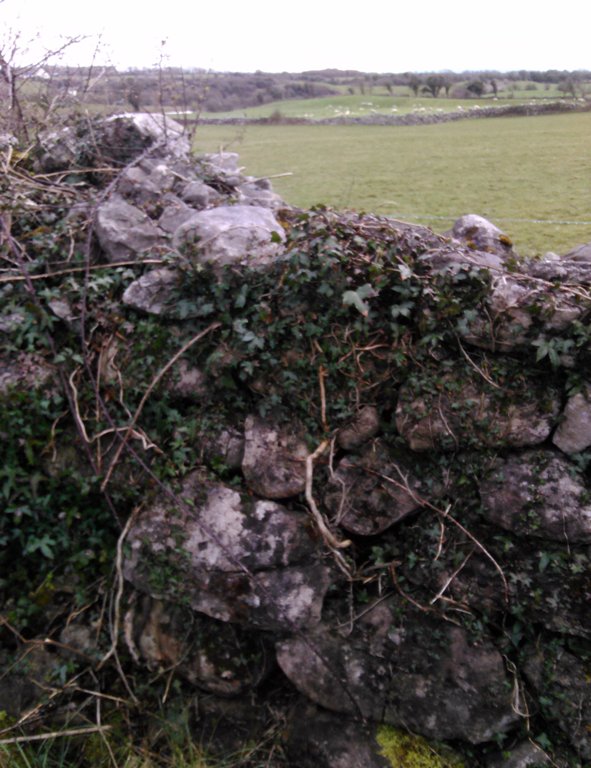
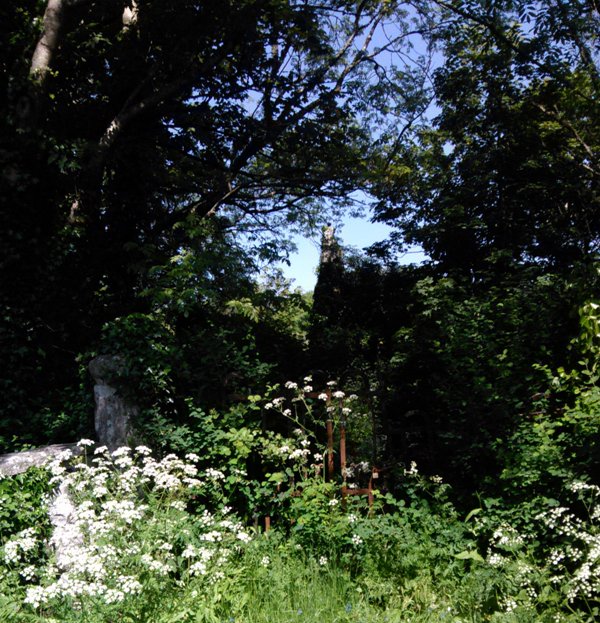
Photo: EO'D
Photo: EO’D

Great excitement prevailed at Ballinderreen on Wednesday (says the “Freeman” April 1), connected with service of processes for non-payment of rent upon tenants of the St. George estate. A fortnight ago the process-server, under the protection of a number of police, attempted to serve the processes, but the attempt failed, owing to the resistance offered by the people. Today a force of sixty police left Galway to assist the process-server, with a contingent of police drawn from other places. The people, however, were apprised in advance of their coming. The dry stone walls on each side of the road had been torn down to the ground and thrown upon the roadway, so that no vehicular or foot traffic could take place upon the road.
The whole force was set at work to clear the debris, but the pace was slow as some of the boulders required two or three police to remove. During the work the chapel bells at Ballinderreen were tolled.  A large crowd of people gathered on a hill over-looking the village and shouted and jeered at the police and the process-server, while the latter did his work by nailing the processes to the doors of the houses of the different tenants who were being processed for rent. Relays of police were stationed all along the public road, and were kept continually employed in making a roadway for the cars.  As the walls were levelled on to the road the whole way. It took three hours to serve all the processes.
The land on that part of the estate is of very poor quality, being cut into small patches by great boulders and other impediments. The price paid by the tenants is between 15s and 20 per acre, and from appearances is far in excess of the value of the land.

Posted in Posts and podcasts

Loughrea – 1844

The Australian 11th Jan, 1844 (abridged)

 Statue of Daniel O'Connell  St. Patrick's Cathedral grounds, Melbourne Photo; Donaldytong Creative Commons

Statue of Daniel O’Connell
St. Patrick’s Cathedral grounds, Melbourne
Photo; Donaldytong
Creative Commons

The first monster meeting since the prorogation of Parliament, came off at Loughrea, in the county of Galway, about ninety miles from Dublin, on Sunday. Mr. O’Connell went with his friends from Dublin in a carriage and four to Ballinasloe. He departed from thence about twelve o’clock on Sunday morning and arrived at Loughrea at three o’clock. At various points along the road groups of people were assembled who hailed Mr. O’Connell with that enthusiasm which is the characteristic of the Irish people. Multitudes, accompanied by bands and banners, went out from Loughrea to meet and escort Mr. O’Connell to the meeting. The procession was swelled by many bands of music and companies of men and women who came from various distances.
Several hundreds of horsemen, many with their wives mounted behind them, joined in the procession. The rain fell heavily during the whole day and somewhat dampened the ardour of the zealous repealers. Mr. Bodkin, M.P., took the chair. Mr. O’Connell’s speech was brief and distinguished by no novelty. Speeches were afterwards made by Dr. M. Hales, Dr. Ffrench, and Mr. J. Ffrench.

Posted in Posts and podcasts

Kinvara, Gort and south Galway – 1922

Freeman’s Journal 27th July, 1922 p.5 (abridged)

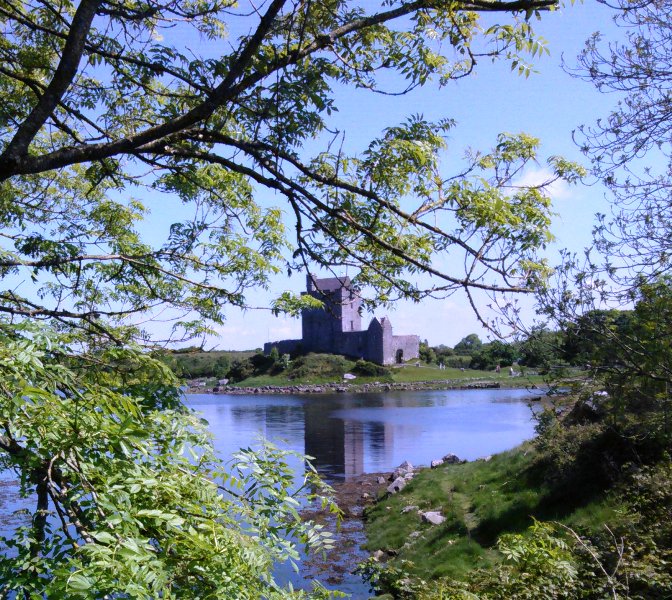
By Ardrahan Road, Kinvara Photo: EO'D
By Ardrahan Road,
Kinvara
Photo: EO’D

The National Forces operating from Galway under Commandant-General Austin Brennan have now begun to clear the country of Irregulars in real earnest, writes our Galway correspondent. As a result of an operation just under the valley of Tullira Castle, on the Kinvara road at Coolfin, sixteen prisoners were captured on Monday afternoon and on Tuesday a total of 22 prisoners was brought to Galway and lodged in the local gaol.
Early on Monday afternoon eight motor vehicles containing over thirty riflemen and their officers left Galway for Gort. They were equipped with cross-cut saws and engineering tools, and quickly cleared the roads on their way. They passed through Ardrahan village without incident, and along the road to the west of Tullira Castle, under the shadow of the Skehanagh heights, which have been made famous by the dramas of Lady Gregory and other Irish play-wrights.

To the west of this road lies the Great Southern Railway line to Gort and Ennis, and at the inlet of the sea further west the village of Kinvara. As the lorries passed along they noticed men on the march through the fields about a mile distant. They were evidently coming from Kinvara and making for Tullira Castle. The lorries passed along the road towards a bend in the hope of getting a better view, but here they found that their range of vision was altogether obstructed by trees and undergrowth. The vehicles were thereupon put in charge of a small party, whilst the little company of riflemen was distributed amongst the three officers and a few efficient sergeants, who had seen considerable service in the recent war. A few of the cars moved slowly back along the road that they had come, whenceupon the men dismounted, and one officer proceeded along a boreen towards the north-west, accompanied by half a score of men in extended formation. The first shot was fired when a scout was seen rushing across the fields apparently to warn his comrades in the rearguard. He was called upon to halt, and shots were then discharged at him at a range of over 400 yards. Thereafter shooting became general at long distance range.

The Irregulars replied, firing about 100 shots in all. Lieut. McCarthy, who was in charge of the centre, crossed a wall with a sergeant whilst bullets whizzed past. As the sergeant fell on his knees to take aim in the fields a bullet grazed his knuckles.

The National troops operated in a “V”, seeking what cover they could find, and sniping at the Irregulars as the occasion offered. The latter had splendid positions and excellent cover and they retreated as they fired. The main body was at least 1,000 yards from their adversaries and it was at this range that most of the shooting took place. When the scout had got clear, there was considerable commotion in the rearguard of the Irregulars, whistles were blown loudly and shrilly and a general retreat took place.


Posted in Posts and podcasts

Cumann na mBan, Sydney – 1919

The Catholic Press 27th February, 1919 p.17

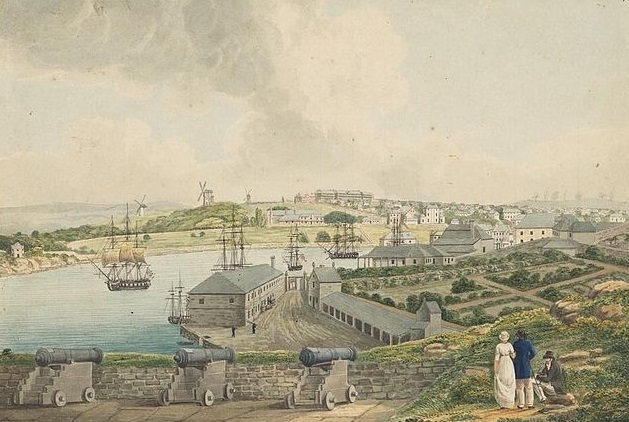
View of Sydney Cove from Dawes Point Source An Historical account of the Colony of New South Wales Author 	Lycett, Joseph, ca. 1775-1828
View of Sydney Cove from Dawes Point
Source An Historical account of the Colony of New South Wales
Author Lycett, Joseph, ca. 1775-1828

Last month was witnessed in Sydney the inauguration of a branch of the Cumann na mBan. The meeting, held for the purpose in the rooms of the I.N.A., Station House, was a very enthusiastic and successful one. After the aims and objects of the association were explained, it was decided by the ladies to place themselves under the patronage of Ethna Carberry, and that the branch be known as An Craob Ethna Carberry (the Ethna Carberry branch). The following ladies were elected office-bearers;
President – Miss B. O’Grady
Vice-Presidents – Miss M. Ryan and Miss Sheehan
Secretary – Miss Amy Ryan
Treasurer – Miss May Maloney
Committee; Mrs Cheetham, Miss Madeline Sheehy, Miss Mary Organ and Miss Kathleen Weber.
The names of Mrs. J. Murphy and Miss Darcy have since been added to the committee.
When the ban has been lifted from the holding of meetings, the Cumann na mBan will meet in the I.N.A. rooms (sixth floor), Station House, at 8 p.m. sharp on Wednesdays and special attention will be given the Irish language, industry, literature, &c. Information as to membership can be had from the secretary Miss A. Ryan, I.N.A., sixth floor, Station House.

Posted in Posts and podcasts

Galway – 1933

Daily Illinois 24th October, 1933

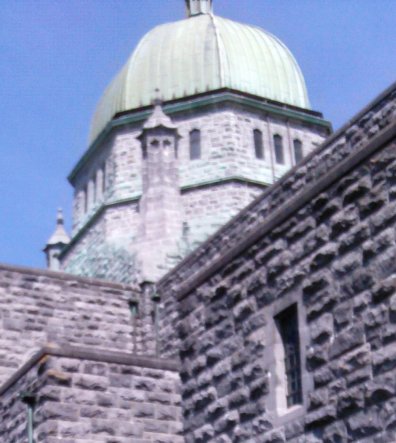
Galway Cathedral Photo:EO'D
Galway Cathedral
Photo:EO’D

The air-minded fisher-folk of this district gave enthusiastic welcome to Col. Lindbergh and Mrs Charles A. Lindbergh today.
The flying American couple made a perfect landing in the great harbour of Galway shortly after 5 p.m. after a five and a half hour flight from Southampton, England.

Posted in Posts and podcasts

Forty+ shades of green – 1907

Kerry Weekly Reporter 12th January, 1907 p.2

Photo: EO'D
Photo: EO’D

Last season 400,000 Forest Trees were exported from the celebrated Waterford Nurseries of Messrs Wm.Power and Co., to help in the reafforesting of England, Scotland and Wales. Nevertheless we hear of some people sending outside Ireland for forest trees. What a world we live in.