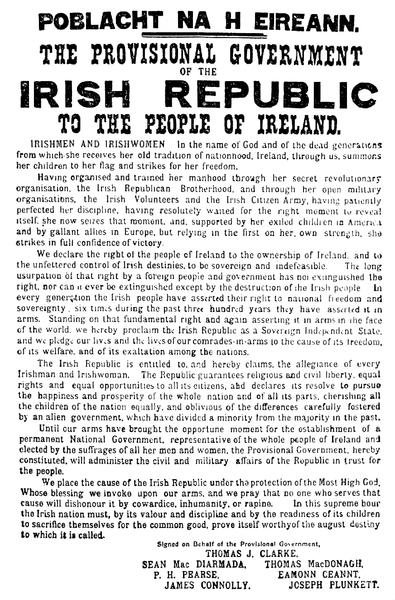
Easter Proclamation 1916Ashburton Guardian Vol XXXVI I. 8441 5th May 1916 p5
ARRESTS PROCEEDING SATISFACTORILY.
(Per Press Association)
LONDON, May 4
An official communique says: “The situation in Ireland is quiet. Arrests of rebels and the collection of arms are proceeding satisfactorily.
“The police barracks at Oranmore were attacked, but resisted until they were relieved. The situation in the West Riding of Galway is under control, the rebels having been dispersed. The south part of Ireland is quiet.
Aliens are being refused entry into Ireland for the time being.”
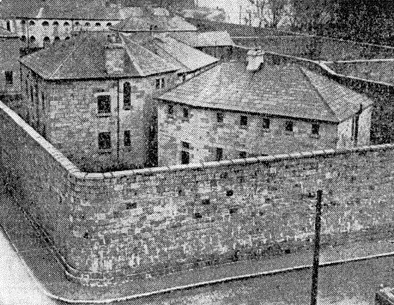
Galway Gaol c.1930 Zealand Tablet Vol XVII I. 18 23rd August, 1889 p 21
Jas. Keane, Thomas Prendergast, Pat Moylon, Robert Thomson and Michael Burke of Ardrahan, were recently released from the gentle care of Balfour’s turnkeys in Galway Gaol, after being two months there. They were met by the Craughwell band, with Father Considine. Contingents from Gort, Kinvara, Kilbecanty and Clarenbridge were on hand to welcome the “criminals”.
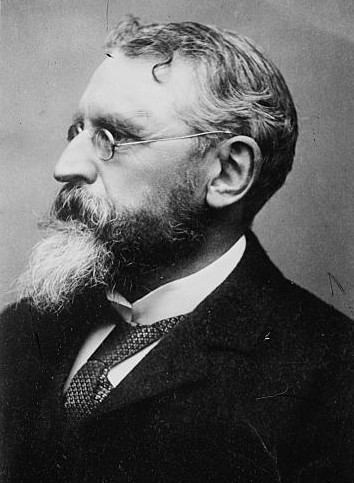
Wuilliam O’Brien MP. (1852–1928), Irish politician, journalist, social revolutionary, author and Member of Parliament in the Parliament of the United Kingdom United States Library of Congress Wikimedia CommonsNew Zealand Tablet, Volume XV, I 18, 26th August 1887, P 21
The demonstrations of delight at Mr. O’Brien’s safe return were by no means confined to the large towns, or those on the immediate line of route from Cork to Dublin. Amongst those places which were illuminated and en fete over the event were the towns of Rathkeale, County Limerick, and Kinvara, County Galway. Nearly every house in these towns was lit up, bonfires blazed in their streets, and crowds of people, with the local bands, turned out in processional order to do honour to the occasion. In Kinvara the burning of Lord Salisbury in effigy at the small hours of the morning brought the proceedings to an appropriate close.
Wikimedia CommonsNew Zealand Tablet 18th October 1889 p21
Irish news
At last meeting of the Kinvara League, Rev. J. Moloney presided, Other members present— Dr. W. J. Nally, Messrs. Burke, Tallman.
Halvey, Shaughnessy, Spellman, and Corless, Hon. Sec The Hon. Sec. reported the receipt of a cheque for £3 from Mr. Harrington, M.P., amount of grant voted by the Central League to Michael Tracy, the evicted tenant of Cahercon.
A communication from John Hall, of Kinvara, relating to a dispute he had with the landlord of his house, Richard Burke, and complaining of the treatment he had received at his hands, was next read and considered. John Burke, of Killina, stated he was being persecuted by his landlord, Mr. Langan, of Dublin, he having sold Burke’s holding for a nominal sum to one Kendall, of Clifden.
Kinvara Branch of the National League held a meeting April 28th
Rev. John Moloney presided. Among those present are Dr. W.J. Nally, Messrs Holland, Burke, Spellman, Cavanagh, Tallman, Shaughnessy, Farrell and Corless. £5 was forwarded to the Central Branch. The following resolution was passed:
“That we hereby beg to tender to Thomas and Patrick Cavanagh our sincere sympathy on the harsh and cruel treatment they have received at the hands of their landlord, Major Lynch, and his agent, Kendall of Connemara, in being evicted.”
Wikimedia CommonsNEW ZEALAND TABLET VOL XXI, ISSUE 20 3rd March 1893 p21
A writer in the Freeman’s Journal has the following suggestive remarks with regard to the sorrow and poverty which he found amongst the children of a typical school in the West of Ireland.
“I once asked the Sisters in charge what might be the children’s idea of Home Rule. The reply was eminently practical – ‘Remunerative employment, shoes and stockings, bread and milk for breakfast, and no more rags.’
I confess I feel not a little ashamed to find myself obliged to pen this letter. Must the cycle of Irish beggary forever go round and round, like Ixion’s wheel? Must those unhappy Kinvara children – so modest and shy that they only reply to your questioning in monosyllables and whispers – must they continue to suffer perennial nakedness and hunger?
Francis A. Fahy is a writer who seems to have struck the popular vein in his productions. Like Mr Graves, he has written a number of songs to familiar airs, and as they are all of the “catching order,” they sink deep in the fancy of the masses. In reading his songs one is struck with the peculiar domination of the national spirit in them, It is interwoven with every other sentiment of the poem and seems inseparable from his verse. Even in his songs of affection, begun in a tender strain, we hear the tread of the soldier and the jingle of his sabre.
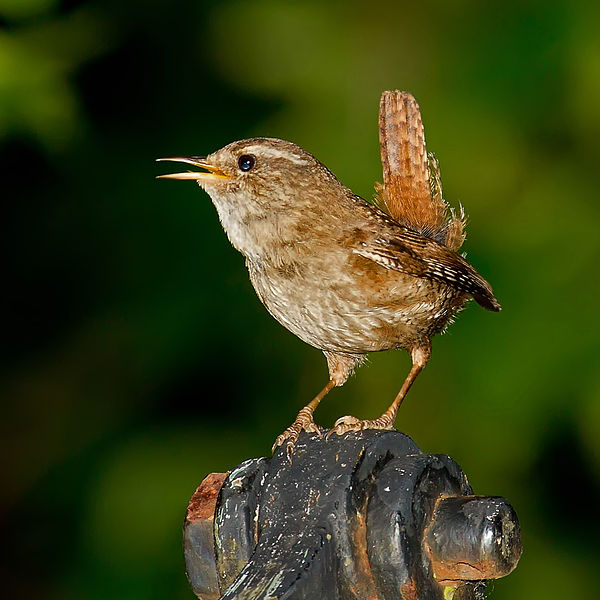
He was born at Kinvara, County Galway on September 29, 1854, and entered the Civil Service in 1873. He has resided in London since that time, and has taken part in many Irish movements, notably the Southwark Irish Literary Club and its successor, the Irish Literary Society. At sixteen years of age he wrote a play “The Last of the O’Leary’s,” which was produced in his native town. In the same year his first printed poem appeared in the Nation. Since then he has contributed from time to time to nearly all the leading periodicals of Ireland and to many in England. Most of his writings appeared over the nom de plume of Dreoilín (the wren).
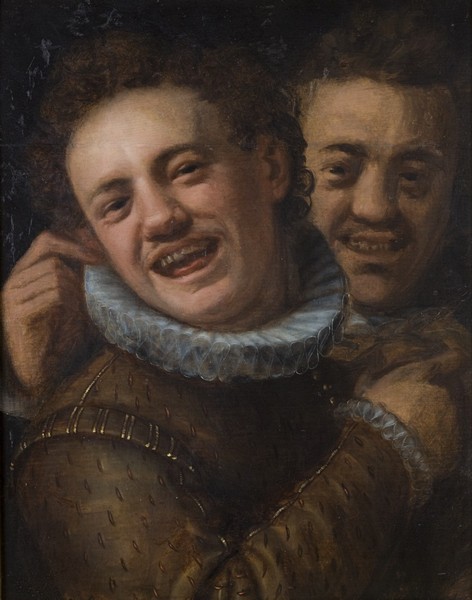
Two laughing men – double Self-Portrait c.1574 Hans von Aachen (1552-1615) Olomouc Museum of Art Wikimedia CommonsNew Zealand Tablet
Vol 27 Issue 21 – 27th May, 1909
GALWAY— A Myth (abridged)
Mr. William Moore, M.P., is a gentleman who takes a genuine delight in endeavouring to make the inhabitants of Great Britain believe that the wickedness of the people of Ireland, the country where he represents a constituency, is past imagining. No matter how pleasant or how peaceable the Irish Catholic may look, he is always, in Mr. Moore’s opinion, brewing mischief. Mr. Moore’s parliamentary life, therefore, consists of a daily array of questions as to what measures the Government have taken or intend to take in order to prevent this or that crime, or to punish this or that criminal. On Thursday, March 11, he enquired in tragic accents what the Government meant to do with Mr. James Hogan,- J.P., of Kinvara.
Mr. Hogan, he stated, was a plague in the community. He was a boycotter and oppressor, and had been inflicting suffering on innocent people. The law-breaker had been brought before the magistrates for his misdeeds, but being of his religious and political belief, they acquitted him. The Resident Magistrate had unavailingly protested against the scandal, and the County Inspector had urged the institution of further proceedings. The Attorney-General for Ireland had, however, refused to act on the suggestion, and the audacious Mr. Hogan, of Kinvara, was still at liberty.
Mr. Redmond Barry, amidst the laughter of the House, informed the-hon. member that Mr. James Hogan, J.P., was a myth that no such person exists at Kinvara, a Galway village, by the way, made famous through- one of Mr. Frank Fahy’s songs. The moral is very plain— that anti-Irish members are perfectly reckless as to the grounds upon which they prefer charges against Irish Catholics and Nationalists.
The inhabitants of Eddy Island, about nine miles from Galway, Ireland, have not paid their rates for several years and £2,000 is now due from them.
Many years ago a small army of bailiffs arrived on the island to make seizures of stock but were beaten off by the islanders. Since then no real effort has been made to get the rates.
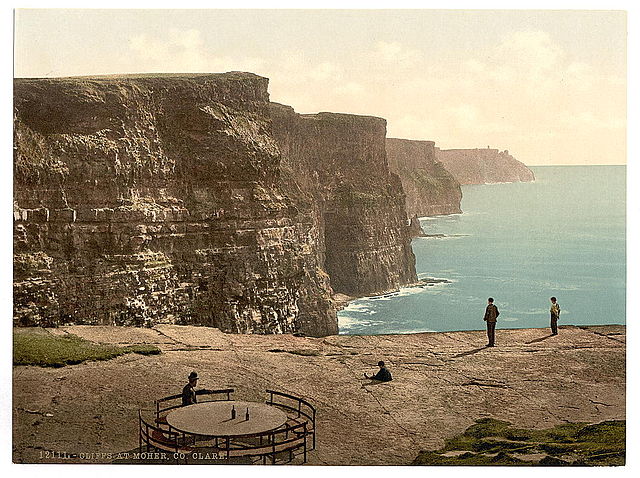
Cliffs of Moher 19th Century Wikimedia CommonsFreeman’s Journal 22nd June, 1864 p3
WRECK OF H.M. GUNBOAT MAGPIE.
Galway, April 5.
Yesterday morning I telegraphed to you the intelligence of an unfortunate accident to the screw gunboat Magpie (2) ; and since then, the additional particulars I have gained are of little importance, expect that she did not float last night, as expected and that fears are now entertained that she will become a total wreck.
The accident occurred at two o’clock on Sunday morning during the thick hazy weather which then prevailed, and which has existed since that time up to the present. The Magpie, which had for some years acted as tender to the Coastguard ship Hawke,at Queenstown, was on her way from that port to Galway with store to the Coastguard stations in its vicinity. Every necessary precaution had been taken to ensure the safety of the vessel when the mist came on, and Captain Bell (with whom every one in Galway sympathises) was just consulting his chart when the boat went ashore with a crash. It was found she had struck on Crab Island, which lies to the south of the famous cliffs of Moher, on the western coast of Clare; and, although an immediate effort to get her off was made, the heavy Atlantic swell which, at the calmest season, rolls in against the cliffs drove her farther ashore.
The boats were out, and a party landed. They procured a car, and drove across the country to Ballyvaughan, which is on the other side of Galway Bay, and from thence a coastguard boat was despatched to Galway for assistance. Captain Hawkes, R.N., the Inspecting- Commander of Coastguards, at once engaged the Atlantic Company’s steam-tiff Rover to proceed to the scene of the disaster, and the Pilot also got up steam and went down to render any necessary assistance.
The steamers got down at evening, but the weather was so thick that the Rover was obliged to lie under Arran Island, and subsequently Black Head, without getting to the Magpie. Yesterday morning, however, she got to Crab Island, and at high water every effort was made to pull the unfortunate gunboat from her position. There was a tremendous surf, and just at the moment when she was beginning to move a wave struck the Magpie, and, the hawser breaking, she was driven still higher on the beach. It was then deemed useless to make any further attempt, and the Rover returned to Galway yesterday evening.
Previous to the arrival of the tugs the men had dismantled the Magpie, and landed, and I understand her guns, one of them a 68 pounder, were thrown overboard. No further attempt to save her will be made for a couple of days, but the general opinion is that she will become a total wreck.— Saunders.


 The Burren and Beyond