The Catholic Press Saturday 4th April, 1896 THE FUTURE OF IRISH MUSIC
The following is taken from a lecture recently delivered at Belfast by M George McSweeney:-
“Mr Arthur Percival Graves, the author of ‘Father O’Flynn’ has done a great deal for Irish music. He has written scores of songs to Irish airs, and his ‘Irish Song Book’ ought to be in every Irish home. But I think I will be doing no injustice to Mr Graves when I say that Mr Francis A Fahy is, in my humble opinion, the best Irish song-writer alive. As they say in the Irish language, he has more of the true blas on his lips than any singer who has appeared in our generation. I trust that Mr Fahy may continue to use his talents in the same direction.
Freeman’s Journal Thursday 14th November, 1907 Personal
Of interest to all lovers of Irish song is any information of the persons who compose the words and music. Reference to two of Ireland’s most gifted children in this respect was madce by Dr Annie Patterson in a recent lecture at Cork. She said;- “Happily, active, and in his prime is Francis A. Fahy. Cheery, bright and full of wit and sympathy are the lyrics he writes, many of which have been delightfully set to music by a gifted countrywoman of ours, Mrs Adelaide A. Needham. We want more poets like Mr Fahy, who is as modest as he is accomplished, and whose work is not only good literature, but is wholly racy of the son.(sic.)
1898 Das Album – Duponthttps://widgetworld3.wordpress.com/podcasts/ Northern Argus(Clare SA; 28 February 1882)
A sad accident happened last week at Sandhurst, to a woman named Mary Scott, which terminated fatally.
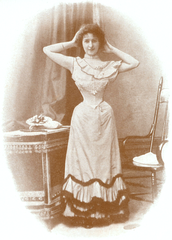
It appears she was in the act of stooping when one of the ribs of her corset injured her in the stomach. The injury was so bad that she had to be taken to the hospital, and an operation was performed. She at first appeared to get better, but afterwards succumbed to her injuries.
https://widgetworld3.wordpress.com/podcasts/
It’s time for our annual Cruinniu na mBad here in Kinvara. Cruinniu na mBad is Irish for the Gathering of the Boats (the ‘u’ in Cruinniu and the ‘a’ in mBad should have a ‘fada’ or ‘accent’ over the letter – I have no idea how to do this in a post – can’t find a symbol insert – my apologies).
The Cruinniu is a boat festival founded by Tony Moylan in 1979 to celebrate the link that existed for many years between the village of Kinvara and Connemara. Before gas and electricity came to Kinvara turf was the main fuel used for cooking and heating. Beautiful, red sailed boats called Galway Hookers sailed between Connemara and Kinvara laden with this fuel as the Kinvara area has no bogs. Kinvara in turn filled the hookers with grain and produce for their return journey. A strong trade developed between the two regions using these great old cargo boats.
Every August since 1979 the mighty Galway Hookers visit Kinvara again. Some of the vessels are over 150 years old, others newly built. They’re beautiful. For some reason I can’t even add media this evening – I wanted to share a photo of these craft – if anyone is interested in boats, real boats, dignified, sturdy, matriarchs of the waves – check out http://cruinniunambad.com/.
Cross Country – Part 2
“Where’s my phone? Did I leave my phone in the car?”
“I saw you put it in your bag. Here’s your thingy Clare.” Emer pulled the ipad from her bag and started to hand it back to her daughter. The ear piece caught on the handle.
“Feck!”
“Mum, don’t break it.” Clare hung over the back of the seat as her mother dodged left and right to find a suitable angle for the pass over. The earpiece flew clear of her handbag to hit her on the glasses.
“Jesus! I’m blinded. My eyes, my beautiful eyes!” The glasses were pulled off with a flourish and hands clapped dramatically over eyes. Drama queen.
Maeve poked her with her elbow.
“Will you behave!”
Finola ignored all, pulling a packet of Kit Kats out of her handbag. They were placed neatly in the centre of the table.
I smiled at the carriage window.
“Did you see that lunatic at Kilcolgan?” Finola folded her scarf tidily and placed it carefully over her coat. The coat was also folded, neatly, across her knees. Maeve struggled with hers. It was a beautiful garment, you could sense the softness of the leather as she slid it from her shoulders.
“Move Emer, you’re sitting on my tail.”
Let back your ears… Lilly M
“Let back your ears and pull like an ass a girleen! Do we have to play cards? I’m useless at cards. I can’t remember a single game.”
“Comon. It’s mighty craic. You’ll remember as soon as you start. I’ll help you.”
“Oh thanks. You’re the biggest cheat on two legs.”
“What? What! Feck off. I am not!” Maeve sniggered across at me.
“Don’t listen to a word. It’s all lies.”
I smiled back. Hadn’t a clue what else to do really. Clearly I was part of the ebb and flow of their banter. I didn’t mind. They were all around my mother’s age and clearly having fun. A big day out.
Finola clattered Emer across the back of the hand. She was reaching for the Kit Kats.
“Ow! Feck!”.
“Wait for the coffee first.”
“Violence, assault. You saw it! You did didn’t you?” Emer grinned at me.
“I have a witness Finola. Now Ha! A witness. She’ll testify. Won’t you?”
“Will you stop disgracing us,” tutted Maeve as Finola pushed the Kit Kats at me.
Fledglings Wolfgang Wander, Papa Lima Whiskey (edit)
I politely declined and was immediately sorry. I like Kit Kats. Two teenage heads appeared behind Maeve and Emer. Right on cue. Like fledgling birds they reached for Kit Kats. Maeve handed them back. The chicks dropped back. Emer opened hers immediately and started eating.
“That lad had a death wish,” said Maeve.
“Fecker. Off with him. I gave him the evil eye out the back window you know. Fecker!”
“Should have taken his number and called the guards. We’re lucky we’re here at all.”
Finola tut tutted into her handbag. Maeve checked her phone. Emer squinted over her shoulder.
“She’s coming, she’s coming!”
“Great! Who’s having what? Laoise, Claire, Dee, what are ye having?”
“Tea please”
“Tea.”
“Have they juice?”
“I’m sure they do,” says Finola.
“Here Emer. Pass this back to them and they can do their own ordering. Dee! Emer has a tenner for you! Get the girls something.”
“You can’t do that! Clare! Don’t take money.”
“I can. Clare! Don’t listen to her.”
“Clare! Listen to your mother. Don’t touch…”
“Will you stop, will you? Clare! Don’t listen to your mother. I’m older than her. Get yourself something. Will you let me get my niece a drink. You can get it on the way home.”
“Ok. Clare! Get something really expensive!”
Finola laughed. Maeve was on the phone. She waved at the pair to stop.
“Fine. Fine. There’s a concert tonight so you’ll have to clean up after you and put all the chairs back. I won’t be home until after 9 so I won’t have time to do anything. It starts at 8. Will you? You will! Good. Alright. I’ll see you later.”
“Tea or coffee?”
“I’ll have a coffee.”
https://widgetworld3.wordpress.com/podcasts/Rjensen at en.wikipedia NEW YORK TRIBUNE, FEBRUARY 11 1902 PAGE 9
HIGH PRAISE FOR FRANCIS FAHY
Joseph Devlin or Ireland, who is at the Hoffman House with William K. Redmond, M.P., one of the leaders of the United Irish League, said last night:“Although I have just reached America for the first time, I rather suspect that the present literary product of Ireland is but slightly known in America. You all know Tom Moore, of course, but do you know our three leading poets of this generation. W.B.Yeats, Lymal Johnson and Katherine Tynan? W. B. Yeats, whose verse has a mystic strain running through it, is probably the widest read in England, and perhaps here. Another of our writers who deserves attention is Francis Fahy, who write the jolliest sort of songs, bright and witty. Many of them have been set to music by Mrs A. Needham. They are well worth while to read or sing.
IMPORT OF PROVISIONS.
THE following arrivals have been entered in the Custom
House since our last publication :
–per Ajax Steamer from London – 209 bags biscuit
Timandra from Cavilla – 2250 quarters Indian Corn
Kate from Galatz – 1300 quarters Indian Corn
Marchioness of Bute – 1300 quarters Indian Corn
Tito from Salonica – 1500 quarters Indian Corn
Minerva Steamer from Liverpool – 355 bags Rice 10 packages Flour
Lima from New Orleans for
Soc. of Friends’ Poor Relief
Committee – 361 barrels Flour
– 598 barrels Indian Corn Meal
– 16 barrels Beans, 6 barrels Pork ; per do.
for American
Consul – 4818 sacks Indian Corn, 42 sacks Wheat
– 25 barrels Flour
– 42 barrels Corn Meal
– 2 barrels Beans
– 2 barrels Beef, 26 sacks Peas
Ballinacurra Lass from
Malta – 890 quarters Indian Corn
Lucinda Jane from
Liverpool – 3500 bushels Indian Corn.
EXPORT OF PROVISIONS.
SINCE our last :-
per Ajax steamer for London – 202 firkins Butter,
– 73 bales Bacon
– 12 casks Hams
– 254 sacks Wheat
– 50 barrels Indian Meal
– 656 sheep
– 33 calves
– 300 boxes eggs
– 50 head cattle
– 90 boxes salmon
Nancy Browne for Newport – 76 head cattle,
Wanderer for New Passage – 230 sheep
William for Newport – 340 sheep
Brothers for Newport – 100 head cattle – 60 sheep
Shannon, for New Passage – 240 sheep, 80 head cattle
Jane and Mary Anne,
for Newport – 110 sheep, 60 head cattle
Nonpareil for Newport – 300 sheep.
The sojourner at New Quay may, on his return from Pouloushe, pay a visit to one of the wells dedicated to St. Colman, which is situated in the county Galway, a few hundred yards from the Castle of Kinvarra, on the road leading to Ardrahan. This fountain is called “Tubbermacduach”-the well of Duachs’s son or descendant. Here is a small spring of water.
Some years ago, when I furnished an account of this fountain, which was published in the first volume of the Dublin Penny Journal, it was neatly walled in, and shaded by a few hawthorns. In the background stood a blasted and withered ash. It seemed to have long been a companion to the reputed holy fountain, and its blighted aspect formed as sad contrast to the verdure of the glebe and shrubs about it. The upper wall enclosing the well was at that time, apparently, of recent erection, and formed a square of about seven feet to the side, having a stile for the admission of devotees and pilgrims. Beneath the square wall just mentioned, and around it there also stood then (1832) another stone fence of a circular form. This last fence had gone considerably to ruin when I last saw Tubbermacduach. There is a small nitche in the interior of the upper wall, on the left-hand side as you enter by the stile. This serves as a receptacle for a cup, as also for the worthless offerings of those whose over-ardent devotion brings them to pray here. A neat cross of stone was erected in front of the well opposite the high road, and still remains there.
https://widgetworld3.wordpress.com/podcasts/ Photo: Olesachem at The Manhattan Well Diggers Wikipedia.orgThomas L. Cooke visited Kinvara in 1842/’43. He explored the ancient ruin beside Dunguaire…and its cellar. As children, we were warned to stay away from the place on account of the ‘swallow hole’. That, and a fast moving tide, could easily end you.
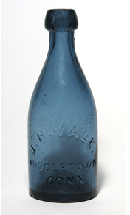
Near the castle already described, but separated from it however by an inlet of the sea, are the ruins of another yet more ancient castle, denominated Dun Guariagh, which signifies “Guaire’s Stronghold.” (I have at present an ancient bottle which was found in a Submarine cellar in this Castle. It is covered with Barnacle shells. – 1860 – T.L. Cooke).
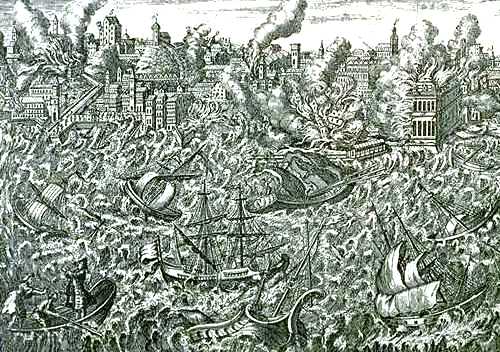
https://widgetworld3.wordpress.com/podcasts/ Lisbon, Portugal, during the great earthquake of 1 November 1755. This copper engraving, made that year, shows the city in ruins and in flames. Tsunamis rush upon the shore, destroying the wharfs. The engraving is also noteworthy in showing highly disturbed water in the harbor, which sank many ships. Passengers in the left foreground show signs of panic. Original in: Museu da Cidade, Lisbon. Reproduced in: The Lisbon Earthquake. British Historical Society of Portugal, 1990 Wikipedia.orgIt is reported, I know not on what authority, that, on the 1st of November, 1755, the day of the great earthquake at Lisbon, a castle, on the western boundary of the parish of Kinvarra, which had formerly belonged to the O’Heynes,’ was destroyed, and a portion of it swallowed up.
(Thomas L. Cooke’s rambles 1842/43)
The 1755 tsunami is also thought to have separated the small island of Aughinish, on the southern shores of Galway Bay from Co. Clare. The castle of Corranrue (Norman) was also damaged.
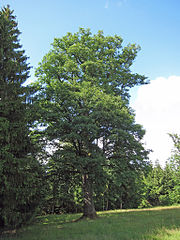
The mighty oak Schönderling Photo:Rainer Lippert Wikipedia.org“Never write anything you can’t put up on an oak tree” Sister Mary of the Sacred Heart (aka Hearty) https://widgetworld3.wordpress.com/podcasts/
Community news and news of great import was once printed on flyers and attached to trees (usually oak) in town/village centres. This was done to reach the widest possible audience. Gossip and scandal was spread by word of mouth. In these instances truth was always the first victim of a good story. Some consolation could be had in the non-discriminatory nature of the gossip. At some point everyone in the village was targeted, irrespective of age, sex, background, socio-economic status, religion or culture. Minority groups were catered for, as were ‘fringe’ elements.
The ‘invention’ of postcards in the mid 1900’s was a Godsend to gossip. They were open and accessible to others than their intended recipients. They were sparse in detail so content often provided the bones of a story while leaving plenty of room for imaginative embellishment (if one felt so inclined). Sometimes just the picture on the front was enough to perpetrate a scandal, and a good one at that.
Then home phones became popular – controlled and managed by switchboard operators – usually from the local post office. The technology was entirely dependent on character and personality. To place a call you had to lift the receiver, crank the handle and (depending on where you lived) wait for the operator to finish their tea/hanging the washing/attending to customers before they’d pick up. Anyone with any manners NEVER called at lunchtime or late at night, unless it was an emergency of unmitigated proportions.
You learned pretty quickly when the operator was in bad form and you learned to adapt accordingly or postpone all intended contact. If you didn’t you might not get connected. Then you had to adapt to their highly individual approaches to phone etiquette. For instances if they decided you talked too much you could get cut off in mid sentence. If they got sick waiting for you to finish you could get cut off. If they needed to be somewhere and you were still talking you could get cut off. If they detected a hint of rudeness your phone was effectively rendered useless. If you didn’t watch your language and the content of your conversation you could get in serious trouble. They might even ring your mother to complain about your manners (yes – it happened).
If you breached these codes or upset the operator and, by default, your mother, you were left with only one option. You had to ring back and apologise for your behaviour. It didn’t matter whether you were right or wrong – you sucked it up, promised there would be no repeat performance and made darn sure there wasn’t.
We learned the importance of self moderation/censorship at a very early age in my village. In hindsight that wasn’t a bad thing.
Supervising (Hacking) and sharing (leaking) were once part and parcel of community life. There were advantages and disadvantages. Fundamentally, if you adapted Sister Mary of the Sacred Heart’s advice never to “write anything you can’t put up on an oak tree” to include phone conversations you couldn’t go wrong. Lesson learned.





 The Burren and Beyond